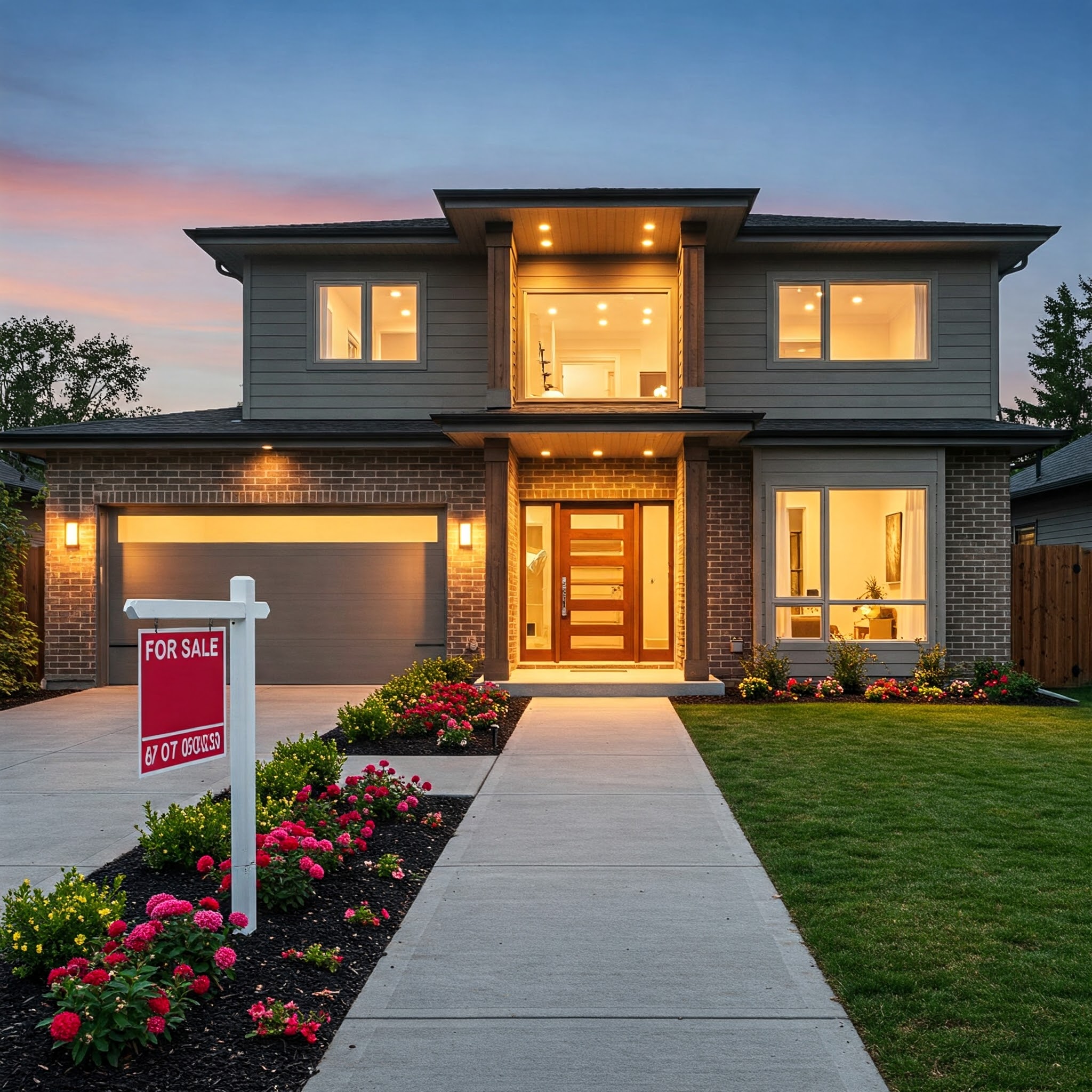
San Jose • San Jose Real Estate • Silicon Valley Homes • August 27, 2025

How to Win a Home in a Low-Inventory Silicon Valley Market

San Jose Realtor reviewing a competitive home offer with buyers in Silicon Valley.By Michael Rulfs — San Jose Realtor® | San Jose real estate agent | DRE #01832571

Question: How do I win a home in a low-inventory Silicon Valley market without overpaying or taking unnecessary risks?Quick answer: In San Jose and across Silicon Valley, you win by preparing before you shop (strong pre-approval, the right team, realistic budget), moving fast on showings, and writing clean, fair offers that balance price and terms. Keep inspections and disclosures front-and-center, lean on your agent’s local data, and avoid tactics that raise Fair Housing concerns.

Understanding Today’s Silicon Valley Market

  • Lean inventory — desirable homes attract multiple offers.
  • Pricing pressure — tech-industry demand supports values in many micro-markets.
  • Fast cycles — top listings can accept offers within days.

Translation: preparation and speed matter as much as price. San Jose buyers who organize early and act decisively win more often — without overreaching.

Pre-Purchase Preparation

1) Get Fully Pre-Approved

Secure a desktop underwritten (or equivalent) pre-approval from a reputable, responsive lender. In a low-inventory market, sellers and listing agents look for proof that your financing is real, fast, and likely to close.

2) Build Your Buying Team

  • Local Realtor — a San Jose real estate agent who understands neighborhood-level data and norms.
  • Lender — ideally one who is responsive on evenings/weekends and familiar with Silicon Valley timelines.
  • Inspector — ready for quick turnarounds if pre-offer due diligence is needed.

3) Know Your Budget (and Your “Walk-Away”)

Beyond payment and down payment, model closing costs, reserves, and potential updates. Decide your max total package (price + terms) before emotions run high. For tax, legal, or financial guidance, consult appropriate professionals.

Winning Strategies for Low-Inventory Conditions

1) Act Fast—but Not Blind

  • Tour promising homes immediately; use virtual tours to pre-screen.
  • Have your lender on standby to update approval letters and run scenarios.
  • If disclosures are available pre-offer, review them thoroughly with your agent.

2) Make Competitive, Clean Offers

  • Price — let recent, hyper-local comps guide your ceiling.
  • Terms — meaningful EMD, clear timelines, and flexibility on closing and rent-backs where appropriate.
  • Contingencies — tighten timelines; avoid waiving essential due diligence without a risk strategy.
  • Presentation — a complete, well-organized offer package reduces friction and signals reliability.

Note on “buyer letters”: personal letters can raise Fair Housing concerns by revealing protected characteristics. A better path is a professional “buyer resume” focused on facts: financing strength, timelines, and cooperation with the seller’s preferred process.

3) Use Technology to Your Advantage

  • Listing alerts and saved searches keep you ahead of new inventory.
  • Digital signatures and mobile-ready documents speed up execution.
  • Shared checklists keep everyone aligned on dates and deliverables.

4) Broaden the Search (Strategy, Not Steering)

Consider nearby areas and different property types that fit your price, commute needs, and lifestyle preferences. Discuss features and budget with your agent; avoid criteria tied to protected classes. The goal is maximizing options while staying fully Fair Housing compliant.

Common Mistakes to Avoid

  1. Waiting for “perfect” — perfection rarely hits the market; focus on essentials and fixable items.
  2. Skipping inspections — even if timelines are tight, understand key condition risks before you commit.
  3. Emotional bidding — set your walk-away number in advance.
  4. Shallow research — review disclosures, comps, and HOA docs (if applicable) before finalizing terms.

Cash vs. Financing in Silicon Valley

Cash Offers

  • Attractive to sellers for speed and certainty.
  • Often fewer contingencies and quicker closings.

Financed Purchases

  • Strong pre-approval and a larger down payment can compete with cash.
  • Local lenders familiar with San Jose norms can shorten timelines.

For financing specifics, rely on your lender; for legal or tax questions, speak with a qualified attorney or CPA.

Negotiation Tips That Win

  1. Know the comps — data-backed pricing earns credibility.
  2. Be flexible — small concessions (move-out dates, rent-backs) can tip the scales.
  3. Let your agent quarterback — professional, calm communication beats pressure tactics.
  4. Have a Plan B — backup offers and next-best targets reduce emotional decision-making.

Post-Offer Playbook

  • Order inspections promptly and follow access timelines.
  • Track contingency dates; remove them only when satisfied with due diligence.
  • Stay responsive with your lender, escrow, and agent to keep the file moving.
  • If issues arise, consider targeted credits instead of broad price changes.

Looking Ahead

The Silicon Valley market will likely remain competitive. Prepared buyers who combine speed with smart risk management continue to win — especially with a San Jose real estate agent who knows the micro-markets, norms, and negotiation rhythms.

Compliance Corner (Plain English)

  • Fair Housing: We focus on property facts and equal access; no language or tactics that could enable discrimination.
  • RESPA: No kickbacks or tie-ins; any referrals are transparent and independent.
  • NAR Code of Ethics: Professional, honest, and client-first representation.
  • Scope limits: For legal, tax, or financial advice, consult your attorney or CPA; your Realtor coordinates the real estate process.
  • CA advertising: Displaying DRE #01832571; brokerage rules and disclosures are followed.

Frequently Asked Questions

How much over asking should I offer in San Jose?

It depends on comps, condition, and competition for that address. Use recent, hyper-local data and your walk-away number to set a confident ceiling.

Is waiving contingencies a good idea?

Only if you understand and accept the risks. Tighten timelines where possible and avoid waiving essential due diligence without a clear plan.

Do cash offers always win?

No. Strong financed offers with clean terms, meaningful EMD, and flexible timelines can compete — especially when the listing values certainty.

Should I write a personal letter to the seller?

Better to avoid letters that reveal personal information. Use a professional “buyer resume” highlighting financing strength and cooperative timelines.

What if I lose out on my top choice?

Have a ranked short list ready. Move on the next best fit using the same clean-offer playbook, and keep your lender and inspector on standby.

Call Michael

Ready to win a home in a low-inventory Silicon Valley market? Work with San Jose Realtor® Michael Rulfs (DRE #01832571) to craft data-driven, clean offers that compete without overreaching. Call (408) 504-0385 or request a private consult.

Meta Description: Buying in low-inventory Silicon Valley? Learn fast, fair strategies to win offers without overreaching. Talk with San Jose Realtor Michael Rulfs today.
San Jose • Selling • August 24, 2025

Selling Your Home As-Is in San Jose, CA: What It Really Means

As is home in San Jose
By Michael Rulfs — San Jose Realtor® | San Jose real estate agent | DRE #01832571

Question: What does selling your home as-is in San Jose actually mean — and is it a smart move in today’s Silicon Valley market?
Quick answer: “As-is” means you’re listing and selling the property in its present condition. You still must disclose known material facts, and buyers can still inspect and request credits. In San Jose, an as-is strategy can trade some prep work for speed and simplicity, especially when pricing, presentation, and terms (timelines, EMD, rent-back) are set correctly by your agent.

“As-Is” in Plain English

In an as-is sale, the seller is signaling no pre-closing repairs. This does not remove the duty to disclose known issues or prevent a buyer from inspections. In Silicon Valley, well-packaged as-is listings often succeed when the price reflects condition, the disclosures are complete, and the marketing is honest and buyer-friendly.

When Selling As-Is Makes Sense in San Jose

  • Timing matters: Relocation, estate sale, or life events where speed and certainty beat squeezing the last dollar.
  • Condition reality: You prefer not to take on repairs or remodels before close.
  • Cash and investor interest: As-is often appeals to buyers who value quick timelines and can look past dated finishes.
  • Micro-market dynamics: Certain San Jose neighborhoods have strong buyer pools even for homes needing updates.

Benefits of an As-Is Strategy

  • Less disruption: Fewer contractors and fewer pre-market projects.
  • Faster to market: Launch sooner while buyer demand is active.
  • Transparent expectations: Clear disclosures reduce late-stage renegotiation.

Trade-Offs to Understand

  • Price sensitivity: Buyers will price in repairs — sometimes generously.
  • Inspection credits: “As-is” doesn’t block buyers from asking for credits on significant items.
  • Appraisal considerations: If the buyer is financed, appraisal can still influence final negotiations.

Setting the Right Expectations (San Jose Best Practices)

  • Price to condition: Use condition-adjusted comps and be realistic about buyer perception.
  • Disclosures first: Provide complete, accurate disclosures (e.g., TDS, SPQ, local forms) to build trust and reduce back-and-forth.
  • Media that’s honest, not harsh: Professional photos, clean and clutter-free rooms, and captions that highlight strengths without hiding realities.
  • Timeline clarity: Set clear access windows and contingency lengths in the MLS and offer instructions.

As-Is vs. Minimal Improvements: How to Decide

Keep It As-Is

  • Pros: Fast to market, less out-of-pocket, fewer logistics.
  • Cons: Lower perceived value; more buyer credit requests possible.

Minimal Improvements

  • Pros: Small spend can lift photos, showings, and perceived value.
  • Cons: Time, coordination, and the risk of overspending on the wrong items.

High-ROI, low-cost refreshers in San Jose often include: deep cleaning, yard tidy-up, decluttering, paint touch-ups, and simple curb appeal. If a $3–5K refresh can add multiples of that in perceived value, it’s worth a look.

Negotiating the As-Is Sale Like a Pro

  • Terms over headlines: Short, realistic contingency windows; clear access; and a meaningful Earnest Money Deposit.
  • Pre-listing inspections (selectively): In some cases they surface issues early, allow smarter pricing, and reduce retrades.
  • Credits as tools: Use targeted credits to move past friction points without taking on pre-sale projects.
  • Buyer strength: Prioritize total package — funds, timelines, and track record — not just the top price.

How San Jose Realtor Michael Rulfs Positions As-Is Listings

  • Smart pricing matched to condition and neighborhood demand.
  • Clear MLS messaging that sets expectations and invites serious buyers.
  • Professional media to showcase light, space, and potential.
  • Offer management that weighs price, credits, timelines, rent-back, and risk.
  • Process management — escrow, disclosures, inspections, and closing — to keep surprises low.

Compliance Corner (Plain English)

  • Fair Housing: Inclusive marketing focused on property facts and equal access.
  • RESPA: No kickbacks or tie-ins; referrals are transparent and independent.
  • NAR settlement & compensation: Commissions are negotiable and set in writing; no fixed or standard rates are implied.
  • Scope limits: For legal or tax questions (e.g., disclosures liability, capital gains, trusts), consult a qualified attorney or CPA.

Frequently Asked Questions

Does “as-is” mean I don’t disclose anything?

No. You must still disclose known material facts about the property. “As-is” mainly speaks to your repair obligations, not your disclosure duties.

Will I scare off retail buyers by listing as-is?

Not if pricing, presentation, and terms are aligned. In San Jose, move-in-ready buyers and investors both compete for well-located homes, even with projects.

Should I do a pre-listing inspection?

Sometimes. It can reduce surprises and help price correctly. Whether it’s worth it depends on your home’s condition and strategy — your agent can advise.

Can I sell as-is to a cash buyer?

Yes. Compare verified cash offers against a listing plan using a net sheet. Cash can add speed and certainty; listing may increase competition.

What small updates give the biggest lift?

Decluttering, deep cleaning, yard refresh, paint touch-ups, and basic lighting often deliver the best “first-impression ROI” for as-is listings.

Learn more:
California DFPI – Escrow Law FAQs
Santa Clara County – Transfer & Conveyance Taxes

Call Michael

Considering selling your home as-is in San Jose or anywhere in Silicon Valley? Let’s price to condition, present honestly, and negotiate strong terms. Contact San Jose Realtor® Michael Rulfs at (408) 504-0385 for a private, data-driven plan.
San Jose Rea Estate • Silicon Valley Homes • August 22, 2025

Selling a Home for Cash in San Jose: Pros, Cons & How to Vet Buyers

Sillicon Valley Realtor Selling for Cash

By Michael Rulfs — San Jose Realtor® | San Jose real estate agent | DRE #01832571

Question: Is Selling a Home for Cash in San Jose the best move for me right now in the Silicon Valley market?
Quick answer: Cash sales trade some potential price for speed and certainty. In San Jose, a verified cash buyer can shorten escrow, reduce financing risk, and sometimes accept more "as‑is" conditions. The key is proof of funds, clean terms, meaningful earnest money, and a reputable escrow/title workflow. Compare any cash offer to a realistic, data-backed listing plan before you decide.

Why Cash Offers Are Common in San Jose & Silicon Valley

The San Jose real estate market attracts a wide range of cash buyers—relocating households, downsizers, investors, and 1031 exchange buyers—who value speed and certainty. For sellers, the question is not whether cash exists; it’s whether the convenience premium is worth it versus listing publicly for maximum exposure.

What “Cash” Really Means (and What It Doesn’t)

  • Proof of funds: Request current, verifiable statements for the actual buyer entity named in the contract (individual, trust, or LLC).
  • No loan contingency: Cash waives lender approval, but an offer can still include appraisal or inspection contingencies—read terms closely.
  • Timeline: In San Jose, many cash closings target 7–14 days, though 21–30 days is common to finish diligence and title work.
  • Earnest Money Deposit (EMD): Size matters less than clarity: when it’s due, when it becomes non‑refundable (if applicable), and who holds it (escrow).

Pros of Selling a Home for Cash in San Jose

  • Speed & simplicity: Fewer moving parts in escrow and fewer scheduling bottlenecks.
  • Lower fall‑through risk: No lender underwriting or last‑minute loan denials.
  • Flexibility on condition: Some cash buyers accept more as‑is items, particularly for homes needing updates.
  • Rent‑back potential: Well-structured rent‑backs can give you time to move without juggling two homes.

Potential Trade‑Offs to Consider

  • Price: Convenience is often priced in. Not always—but frequently.
  • Fewer competing bids: Going off‑market with one buyer may reduce leverage.
  • Terms over headlines: A “cash” label can mask thin EMDs, numerous contingencies, or aggressive credit requests.
  • Process risks: Avoid anyone pressuring you to skip standard escrow/title procedures or wire funds outside secure channels.

How to Vet a Cash Buyer in San Jose (Step‑by‑Step)

  1. Confirm identity & representation — Who’s buying (individual, LLC, trust)? Is their agent properly licensed and in good standing?
  2. Verify proof of funds — Redacted, recent statements tied to the contracting entity. Cross‑check names and ownership.
  3. Scrutinize contingencies — Appraisal/inspection periods, access timelines, and any “as‑is” language. Make sure timelines are realistic.
  4. Evaluate EMD — Amount, deposit deadline, and conditions for release or non‑refundability. Bigger is not always better—clarity is.
  5. Use reputable escrow/title — In San Jose, neutral, licensed providers safeguard funds and ensure proper recording and compliance.
  6. Compare net outcomes — Ask for a listing vs. cash side‑by‑side net sheet from your agent to see which path best supports your goals.

As‑Is Cash vs. Light Prep & Listing: Which Makes Sense?

As‑Is Cash

  • Pros: Fast, predictable, minimal prep, less disruption.
  • Cons: Potentially lower price; inspection credits may still pop up.

Light Prep + Public Listing

  • Pros: Maximum exposure to San Jose & Silicon Valley buyers; potential for multiple offers.
  • Cons: More prep/showings; slightly longer timeline to close.

When a Cash Offer Makes Sense in San Jose

  • You want speed or certainty due to job relocation, family timing, or an estate sale.
  • The property needs repairs you don’t want to tackle before closing.
  • You receive a verifiable cash offer with strong terms (clean contingencies, meaningful EMD, possible rent‑back).
  • Your side‑by‑side net comparison (cash vs. listing) shows a small difference after costs and credits.

When Listing Could Net More in San Jose

  • Your home is move‑in ready and aligns with current buyer demand.
  • Highly desirable micro‑location likely to attract multiple offers.
  • You have time to prep, show, and let the market work for you.

How San Jose Realtor Michael Rulfs Protects Your Interests

  • Clarity on pricing & net: Data‑driven comps, realistic list strategies, and net sheets that compare cash vs. listing.
  • Offer vetting: Verify funds, timelines, and buyer credibility to reduce friction and risk.
  • Negotiation: Improve EMD, streamline contingencies, and secure favorable rent‑back terms where appropriate.
  • Process management: Coordinate escrow, inspections (when applicable), disclosures, and closing to minimize surprises.

Frequently Asked Questions

Sometimes. Even without a lender, some buyers use internal valuations or include appraisal clauses.

Not necessarily. “As‑is” can mean fewer pre‑sale repairs, but buyers may still request credits after inspections. You must disclose known material facts.

Yes. It’s smart to compare verified cash offers alongside a data‑backed listing plan. A net sheet helps you choose the best total package.

Many cash transactions target 7–14 days; some take 21–30 days to complete diligence and title work.

Decline. Use a licensed, neutral escrow/title provider and secure wiring procedures. If something feels off, pause and consult your agent.

Call Michael

Considering Selling a Home for Cash in San Jose or anywhere in Silicon Valley? Let’s compare a verified cash offer to a targeted listing strategy so you can move with confidence. Contact San Jose Realtor® Michael Rulfs (408) 504-0385 for a private, data‑driven plan.

DRE #01832571

San Jose • San Jose Real Estate • Silicon Valley Homes • March 10, 2025

Santa Clara County Real Estate Market Update: February 2025

Santa Clara County Real Estate Market Update: February 2025

By Michael Rulfs, REALTOR®

Market Overview: Signs of an Early Spring

February 2025 has brought notable shifts to the Santa Clara County housing market, with early indicators suggesting we may be in for an active spring season. This month’s data reveals faster sales, increasing inventory, and continued price appreciation—creating both opportunities and challenges for buyers and sellers.

Key Statistics for Single-Family Homes

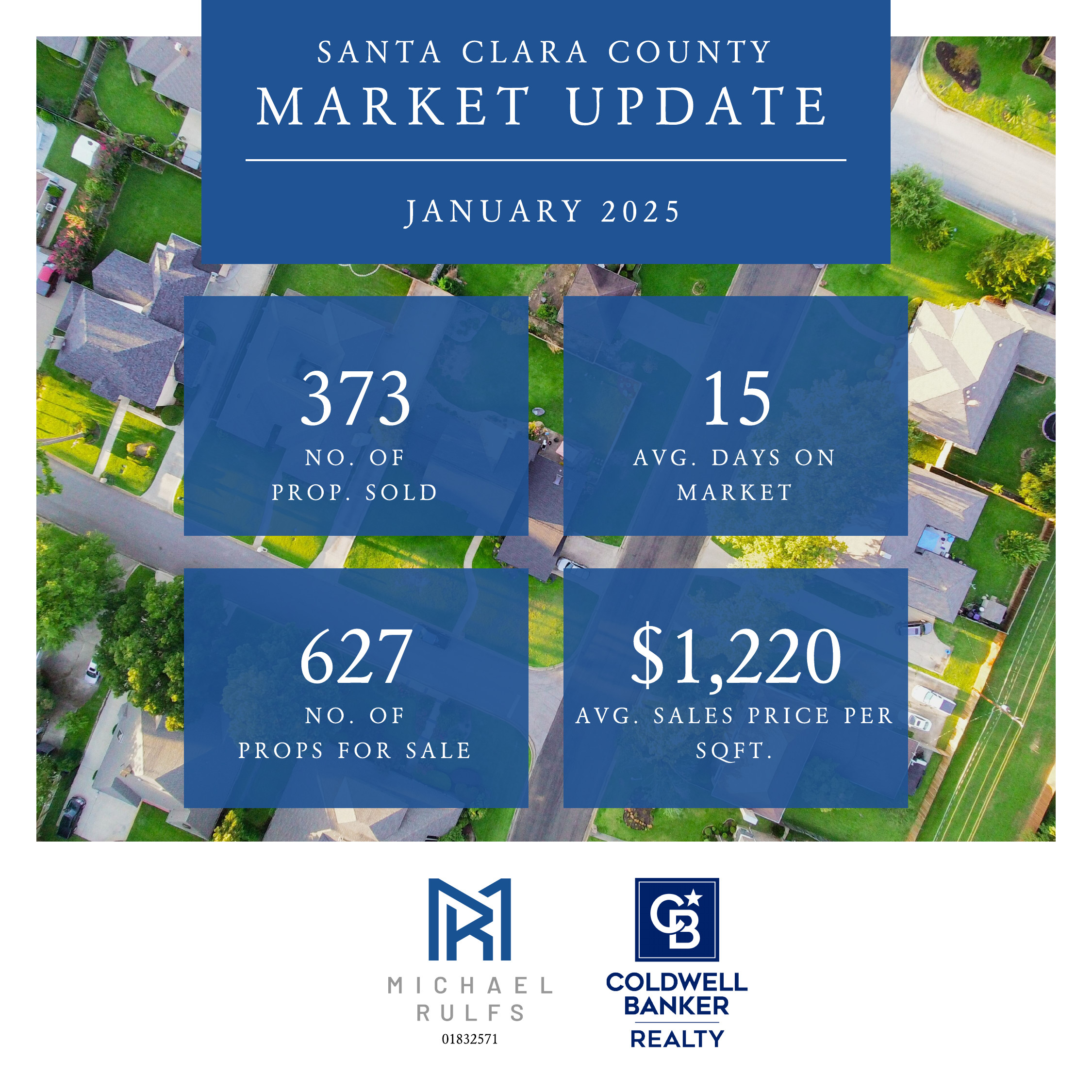
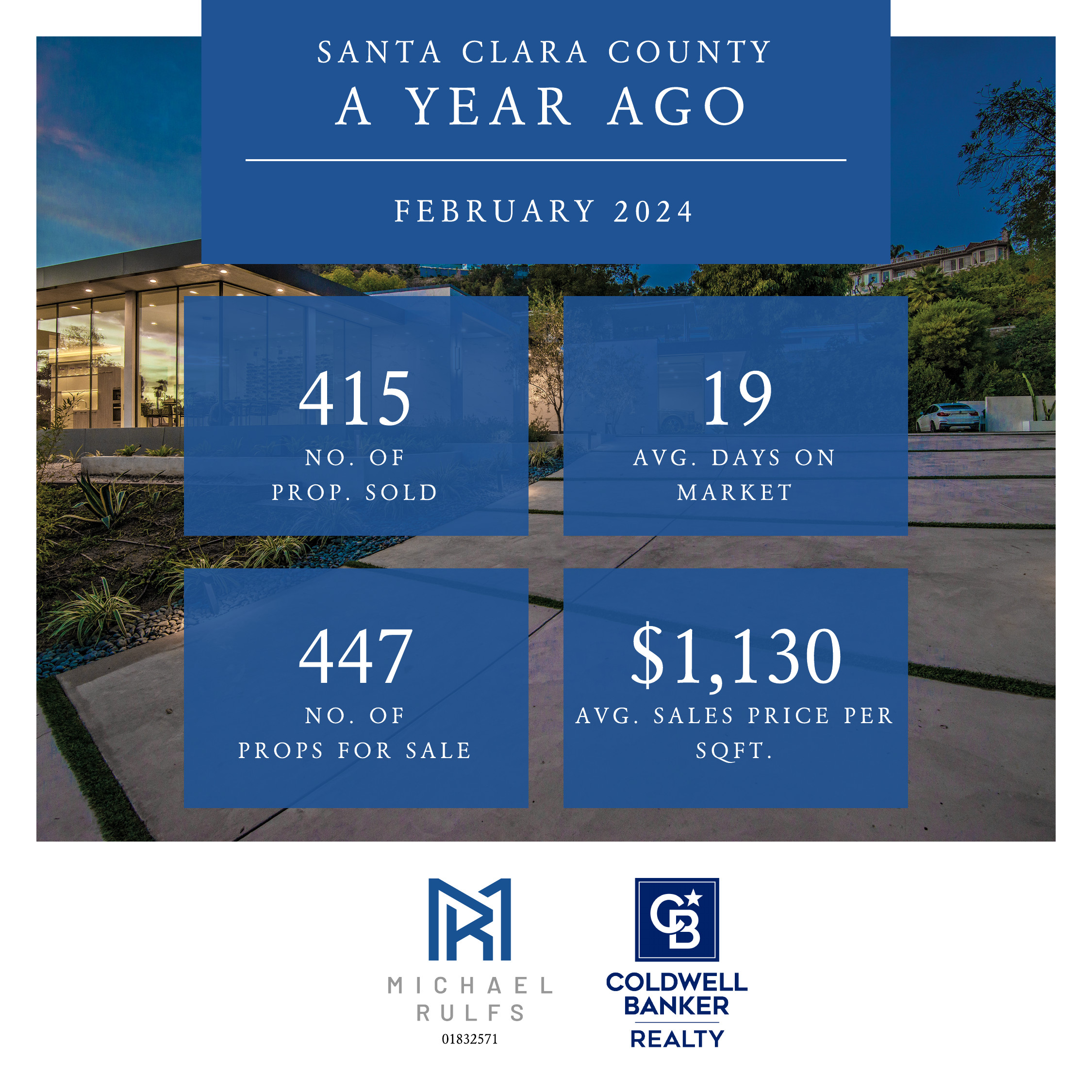
  • 373 Homes Sold: We’ve seen a 11.3% increase from January’s 335 sales, though still trailing behind February 2024’s 415 transactions. This upward monthly trend suggests improving market activity as we enter the traditionally busy spring season.
  • 15 Average Days on Market: Properties are moving significantly faster than in January (28 days) and even quicker than February of last year (19 days). This acceleration indicates strong buyer demand and competitive bidding situations for well-priced homes.
  • 627 Homes for Sale: Available inventory has increased substantially—up 51.4% from January’s 414 listings and 40.3% higher than the 447 homes available in February 2024. This expanding selection provides more options for buyers who have been frustrated by limited choices.
  • $1,220 Average Price per Square Foot: Pricing continues its upward trajectory, rising from $1,157 in January and showing a healthy 8% year-over-year increase from $1,130 in February 2024. This persistent appreciation reflects the region’s strong economic fundamentals and ongoing housing demand.

What This Means for Sellers

If you’re considering selling your Santa Clara County property, current conditions present several advantages:

  1. Accelerated Sales Cycle: With homes selling in just over two weeks on average, you may experience a shorter period of showings and market disruption to your daily life.
  2. Continued Price Appreciation: The steady increase in per-square-foot pricing suggests ongoing demand and potential for strong offers, particularly for well-maintained, move-in ready properties.
  3. Strategic Importance of Proper Pricing: Despite favorable conditions, the expanding inventory means buyers have more options. Working with an experienced agent to set the right initial price point remains crucial for maximizing your return.

What This Means for Buyers

For those looking to purchase a home in Santa Clara County, February’s numbers highlight important considerations:

  1. Improved Selection: With inventory up significantly, you’ll have more properties to consider than at any point in the past year—potentially reducing the pressure to make rushed decisions.
  2. Persistent Competition: Despite more listings, the decreased days-on-market metric indicates properties are still moving quickly. Being prepared with pre-approval and decisive action remains essential.
  3. Rising Cost of Waiting: The continued price appreciation trend suggests that delaying a purchase may mean paying more for similar properties in the coming months.

Neighborhood Variations

While county-wide statistics provide a valuable overview, it’s important to note that market conditions vary significantly across Santa Clara County’s diverse neighborhoods:

  • Premium Markets (Los Altos, Palo Alto, Saratoga): These areas continue to command the highest prices and often see the most competitive bidding situations.
  • Mid-Range Markets (Campbell, Santa Clara, parts of San Jose): These locations are experiencing some of the most balanced conditions, with healthy inventory growth but sustained buyer interest.
  • Entry-Level Markets: First-time buyer-friendly areas are seeing particularly strong demand as buyers try to enter the market before further price increases.

Looking Ahead: Spring Market Forecast

As we move deeper into 2025, several factors will likely influence our local market:

  1. Interest Rate Environment: Any adjustments to mortgage rates will directly impact affordability and buyer demand.
  2. Tech Sector Performance: The health of Silicon Valley’s major employers continues to be a significant driver of local housing demand.
  3. Seasonal Patterns: We’re entering the traditionally active spring and summer months, which typically bring increased listing and sales activity.

Considering a Move?

Whether you’re thinking about buying or selling in Santa Clara County, today’s market requires careful strategy and local expertise. Every property and situation is unique, and I’m here to help you navigate these evolving conditions with personalized guidance.

If you’d like to discuss how February’s market trends might impact your specific real estate goals, or if you’re interested in a complimentary property valuation, please don’t hesitate to reach out.

Connect With Me

Michael Rulfs, REALTOR®
Coldwell Banker Realty
DRE #01832571
1712 Meridian Ave., San Jose, CA 95125
(408) 504-0385
Michael.Rulfs@cbrealty.com
RulfsRealEstate.com

Follow me for more updates: @michael_rulfs


Data reflects single-family home activity in Santa Clara County for February 2025. For information on condos, townhomes, or specific neighborhoods, please contact me directly.

San Jose • San Jose Real Estate • Silicon Valley Homes • March 6, 2025

How to Use a 1031 Exchange to Upgrade Your Investment Property (And Defer Taxes!)

1031 Exchange real estate investment property upgrade with tax deferral benefits.

If you own an investment property and are considering selling, you may be facing a major tax bill on your capital gains. But what if you could defer those taxes and reinvest 100% of your profits into a better, higher-performing property?

That’s exactly what a 1031 Exchange allows you to do. This powerful strategy helps real estate investors upgrade their properties, build long-term wealth, and avoid unnecessary tax payments.

As a real estate expert and fellow owner in the Princevalle Townhomes, I specialize in helping investors like you navigate 1031 Exchanges and find the right replacement property. Let’s break down how this works and why it might be the smartest move for your portfolio.


What Is a 1031 Exchange?

A 1031 Exchange, named after Section 1031 of the IRS tax code, allows investors to sell an investment property and reinvest the proceeds into another “like-kind” property—without paying capital gains taxes at the time of the sale.

Instead of giving thousands (or hundreds of thousands) to the IRS, you get to keep that money working for you in a better investment property.

Here’s how it works:
1️⃣ Sell Your Investment Property – List your property and secure a buyer.
2️⃣ Use a Qualified Intermediary (QI) – The proceeds from the sale must be held by a third-party intermediary (not you).
3️⃣ Identify a Replacement Property (Within 45 Days) – You must select a new property (or multiple) within 45 days.
4️⃣ Close on the New Property (Within 180 Days) – You must finalize the purchase within 180 days of selling your first property.

If done correctly, you pay zero capital gains taxes, and your wealth continues to grow!


Who Qualifies for a 1031 Exchange?

You may qualify for a 1031 exchange if:
✅ You are selling an investment or rental property (not a primary residence)
✅ The new property is “like-kind” real estate (rental homes, multifamily units, commercial properties, etc.)
✅ You follow the IRS deadlines (45-day identification & 180-day closing rules)
✅ You reinvest all proceeds from the sale into the new property

Many property owners don’t realize that a 1031 Exchange can be used to upgrade from a condo, townhouse, or rental home into a larger or more profitable property—without paying capital gains taxes.


Why Should You Consider a 1031 Exchange?

1. Keep More of Your Money (Defer Capital Gains Taxes!)

Capital gains taxes can take a huge chunk of your profits when selling an investment property. A 1031 exchange allows you to defer these taxes indefinitely, meaning you can keep your money invested instead of handing it over to the IRS.

2. Upgrade to a More Profitable Property

If your current rental property has high maintenance costs, low cash flow, or limited appreciation, a 1031 exchange allows you to upgrade into a better property—one that generates more income and requires less upkeep.

3. Diversify Your Portfolio

Want to move from a condo to a single-family rental? Or from a small rental to a multifamily unit? A 1031 exchange allows you to shift your investment strategy without the tax burden.

4. Scale Your Investments and Build Wealth

Many top real estate investors use 1031 exchanges repeatedly, rolling gains from one property into another over time. This allows them to build wealth tax-deferred, potentially turning a small investment into a multi-million-dollar portfolio.


Common Mistakes That Can Disqualify a 1031 Exchange

While a 1031 exchange is a powerful tool, it only works if you follow the IRS rules. Here are some common mistakes that could disqualify you:

🚫 Selling a primary residence – Only rental or investment properties qualify.
🚫 Missing the 45-day or 180-day deadlines – Strict timelines apply, and missing them voids your tax deferral.
🚫 Taking possession of the sale proceeds – Funds must go to a Qualified Intermediary, not your personal account.
🚫 Not reinvesting 100% of the funds – Any amount not reinvested is taxable.


Is a 1031 Exchange Right for You? Let’s Talk.

If you own a rental or investment property in Princevalle Townhomes or anywhere in the Bay Area, you may have an opportunity to upgrade your investment, increase your cash flow, and defer taxes using a 1031 exchange.

I specialize in helping investors like you find the right replacement properties and navigate the 1031 exchange process smoothly.

Let’s schedule a quick consultation to see if a 1031 exchange is the right move for you. No pressure—just expert advice!

Loading Contact Me...
San Jose • San Jose Rea Estate • February 25, 2025

7 Common Mistakes Home Sellers Make (And How to Avoid Them)

Selling Your Home? Avoid These 7 Costly Mistakes

Selling a home can be both exciting and stressful. While every seller wants to maximize their profit, many unknowingly make mistakes that can delay the sale or reduce their home’s value. If you’re planning to sell your home, avoid these seven common mistakes to ensure a smooth and profitable transaction.

1. Overpricing Your Home

Why It’s a Mistake: Pricing your home too high can scare off potential buyers and lead to your listing sitting on the market longer than necessary. How to Avoid It: Work with a real estate professional to analyze market data and set a competitive price from the start.

2. Neglecting Necessary Repairs

Why It’s a Mistake: Buyers will notice even minor issues, and unaddressed problems can lead to lower offers or failed negotiations. How to Avoid It: Fix major and minor repairs before listing, including leaky faucets, chipped paint, or outdated fixtures.

3. Poor Home Presentation & Staging

Why It’s a Mistake: A cluttered or poorly presented home can turn buyers away and make spaces look smaller or unappealing. How to Avoid It: Declutter, depersonalize, and professionally stage your home to highlight its best features.

4. Ignoring Curb Appeal

Why It’s a Mistake: First impressions matter! A home with poor curb appeal may deter buyers before they even step inside. How to Avoid It: Keep the lawn trimmed, add fresh mulch, plant flowers, and ensure your entryway is inviting.

5. Being Unprepared for Showings

Why It’s a Mistake: Limiting showings or having a messy home during visits can drive buyers away. How to Avoid It: Keep your home in show-ready condition at all times and be flexible with showing schedules.

6. Not Marketing Effectively

Why It’s a Mistake: Relying solely on traditional listing methods may limit your reach and result in fewer potential buyers. How to Avoid It: Utilize high-quality photos, video tours, social media, and online listings to attract more buyers.

7. Choosing the Wrong Agent (or Selling FSBO)

Why It’s a Mistake: Selling without an experienced real estate agent can lead to pricing errors, poor negotiations, and legal complications. How to Avoid It: Work with a qualified agent who has experience in your local market to guide you through the process.

Final Thoughts

Selling your home is a major financial decision, and avoiding these mistakes can help you sell faster and for the best price possible. Partnering with an experienced real estate professional can make the process seamless and stress-free.

📞 Need expert guidance on selling your home? Contact me today for a free consultation!

San Jose • San Jose Rea Estate • Silicon Valley Homes • February 22, 2025

5 Costly Mistakes Homebuyers Make (and How to Avoid Them)

5 Costly Mistakes Homebuyers Make (and How to Avoid Them)

Introduction

Buying a home in Silicon Valley is an exciting milestone, but it’s also one of the biggest financial decisions you’ll ever make. With competitive bidding wars, rising home prices, and a fast-moving market, the stakes are high. Unfortunately, many buyers—especially first-timers—fall into common traps that can cost them time, money, and even their dream home.

To help you navigate this market with confidence, let’s break down the five biggest mistakes homebuyers make and how you can avoid them.

Mistake #1 – Not Getting Pre-Approved for a Mortgage

In a fast-paced market like Silicon Valley, not getting pre-approved before house hunting is a critical mistake. Many buyers assume they know what they can afford, only to find out later that their financing doesn’t align with their expectations.

Why Pre-Approval Matters

  • Stronger Offers: In competitive areas like Los Gatos, Saratoga, and Cupertino, sellers favor pre-approved buyers who have proof of funds.
  • Better Budgeting: Pre-approval helps you understand your true price range, preventing disappointment later. Nothing is worse than touring a home, starting the offer process, and finding out you can’t afford the home once your lender starts to look at the numbers.
  • Faster Closing: Sellers and agents take pre-approved buyers more seriously, often leading to quicker transactions. It’s common to see homes close in 10-20 days in this market—the quicker you can close, the stronger your offer is.

Mistake #2 – Ignoring Hidden Costs

Many homebuyers focus only on the down payment and forget about the other costs associated with homeownership. This can lead to financial strain after closing.

What Are the Hidden Costs?

  • Closing Costs: Expect to pay 2-5% of the home price in fees, including escrow, title insurance, and lender fees.
  • Property Taxes: In California, property taxes are around 1.1% of the home’s value, but some neighborhoods have additional assessments.
  • HOA Fees: Many communities in Silicon Valley have HOA fees ranging from $200 to $800+ per month.
  • Agent Commission Fees: As of recent legal changes, buyers must sign a Buyer Representation Agreement. While negotiable, most agent commissions range between 2-3%. Sellers still cover this fee in most cases, but a strong agent can help navigate and negotiate this into your purchase.
  • Maintenance & Repairs: Older homes in areas like Willow Glen may require major updates—factor this into your budget.

Conclusion

Buying a home in Silicon Valley is a high-stakes process, and avoiding these five mistakes can save you time, money, and stress. By staying financially prepared, understanding hidden costs, keeping emotions in check, thoroughly reviewing inspections, and considering resale value, you can make a smarter investment.

Working with an experienced real estate agent can help you navigate these challenges and secure the best deal possible. If you’re ready to buy a home in Silicon Valley, reach out to a professional who understands this competitive market.

Contact me for a free consultation.

FAQs

What’s the biggest mistake first-time homebuyers make?

One of the biggest mistakes is not getting pre-approved for a mortgage before starting their home search. This can lead to disappointment when they realize they can’t afford the homes they’ve been viewing.

How much should I budget for hidden homeownership costs?

In addition to your down payment, budget for closing costs (2-5% of the home price), property taxes, insurance, maintenance, and potential HOA fees.

Is skipping a home inspection ever a good idea?

It’s generally not recommended. Even if a seller provides a pre-listing inspection, hiring your own inspector can help you identify hidden issues and better understand the home’s condition.

How can I avoid getting caught in a bidding war?

Work with a skilled agent who can craft a strong, competitive offer without overpaying. Consider strategies like flexible closing dates or writing a compelling personal letter to the seller.

What factors affect a home’s future resale value?

Location, school districts, neighborhood growth, and home features all play a role in resale value. Investing in a home with strong future demand ensures long-term financial security.

Condo for sale • Home Tour • San Jose • San Jose Rea Estate • Silicon Valley Homes • Uncategorized • February 22, 2025

Luxury Condo for Sale in San Jose – Full Tour of 951 S 12th St #110

Discover a rare gem in the heart of Silicon Valley! This stunning corner-unit condo offers the perfect blend of luxury, privacy, and convenience. With its unique private street entrance and townhome feel, this 1,277-square-foot residence stands out in downtown San Jose’s competitive real estate market.

A Perfect Balance of Space and Style

Step into an expertly designed floor plan where natural light floods through large windows, highlighting the home’s contemporary features. The open-concept layout creates an inviting atmosphere, ideal for both entertaining and everyday living. High ceilings and modern laminate flooring throughout add to the spacious feel, while a cozy fireplace serves as the perfect focal point for gathering with family and friends.

Gourmet Kitchen Meets Modern Living

The heart of this home showcases a beautifully appointed kitchen featuring:

  • Custom cabinetry and sleek granite countertops that provide both style and functionality
  • A generous breakfast bar perfect for casual dining or working from home
  • An open flow into the dining area and family room, creating a seamless entertainment space

Thoughtfully Designed for Privacy

Unlike typical condos, this unique floor plan positions the two bedrooms on opposite ends of the unit, offering maximum privacy – perfect for families, roommates, or a dedicated home office setup. The primary suite stands out with its:

  • Luxurious walk-in closet for abundant storage
  • Spa-like bathroom featuring dual vanities
  • Oversized soaking tub for ultimate relaxation

Premium Comfort & Modern Upgrades

Recent improvements ensure year-round comfort and efficiency:

  • New furnace and AC system
  • Updated heat pump
  • In-unit laundry
  • Ample storage throughout

Location, Location, Location

Situated in one of San Jose’s most sought-after neighborhoods, 951 S 12th St #110 puts you at the center of Silicon Valley’s best:

  • Minutes from downtown San Jose’s vibrant culture and dining
  • Easy access to major tech employers including Apple, Cisco, and Nvidia
  • Walking distance to Shark Ice and San Jose Giants Stadium
  • Close proximity to San Jose State University
  • Convenient access to San Jose Airport, major highways, and public transportation

Exclusive Community Benefits

This gated community offers the perfect blend of security and leisure:

  • Two designated parking spots in the secure garage
  • Refreshing community pool
  • Underground mail facilities
  • Well-maintained common areas

Investment Potential in Silicon Valley

With its prime location, thoughtful layout, and modern amenities, this condo represents an excellent opportunity for both homeowners and investors in the dynamic Bay Area real estate market. The combination of private entrance, corner-unit positioning, and recent upgrades makes this property stand out in San Jose’s competitive market.

Schedule Your Private Tour Today

Don’t miss the chance to call this exceptional property home. Text “UNIT 110” to 408-504-0385 to schedule a viewing or receive additional information about this unique downtown San Jose residence.