
 Facebook
 X
 Pinterest
 Copy Link
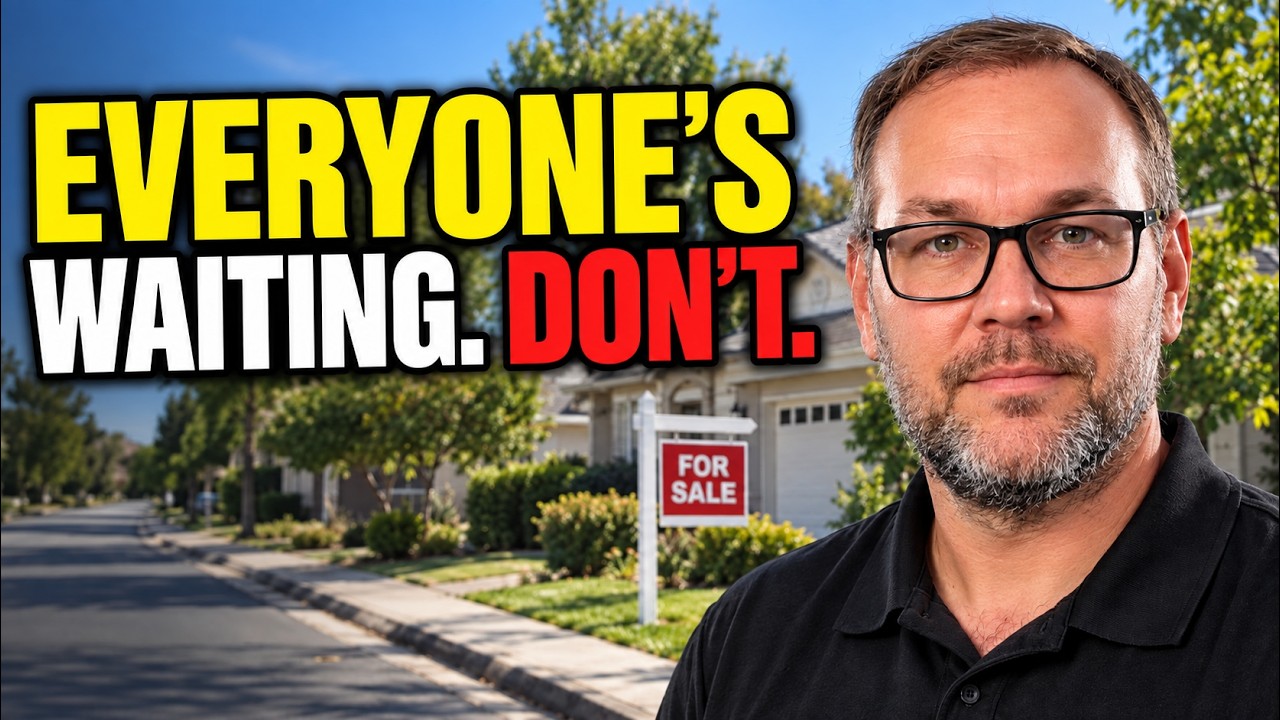
The short answer: If I were buying a home at 7 percent in Santa Clara County, I would plan my budget at 7% with no refinance in the math, shop homes that have sat 30 days or taken a price cut, and ask the seller to pay for a rate buydown instead of a price cut. I would only do it if I planned to own for at least five years.
Daily mortgage rate quotes crossed 7% in late September 2026 for the first time since January 2025. At the same time, the median single-family house in Santa Clara County sat right around $1.9 million, about where it was a year earlier. So most buyers I talk to have the same plan. Wait.
I get it. But I’m third-generation South Bay. I grew up in Almaden, went to Leland High School, and my grandpa bought in Los Altos around 1950 when people already said prices couldn’t go higher. This county doesn’t behave like the rest of the country, and the last time rates went past 7% proves it. Here’s what I’d actually do if I were buying a home at 7 percent right now.
I walked through this on camera. I also covered why rates jumped in my September 2026 livestream: Mortgage rates hit 7% (LIVE).
What happened the last time rates passed 7% here?
The fall of 2023 is the best test we have. The week of October 26, 2023, the Freddie Mac 30-year average hit 7.79%. That was the highest since 2000 and higher than the quotes in late September 2026. Everyone said prices had to fall.
They didn’t. The county median for a single-family home was right around $1.705 million in January 2024. By May 2024 it was right around $2.1 million. That’s about $400,000 in four months.
Rates didn’t help during that run. They climbed from about 6.6% in January 2024 back to 7.22% the first week of May 2024. Buyers who sat out at 7.79% did get a lower rate eventually, about 6.08% by late September 2024. By then the house they wanted had a two in front of the price instead of a one.
| Period | 30-year rate (Freddie Mac) | County single-family median |
|---|---|---|
| Late October 2023 | 7.79% | Buyers told to wait |
| January 2024 | About 6.6% to 6.7% | About $1.705M |
| Early May 2024 | 7.22% | About $2.1M |
| Late September 2024 | About 6.08% | About $1.85M (August 2024) |
| Late September 2026 | Daily quotes over 7% | About $1.9M |
Why prices here don’t follow the rate
In this county the price isn’t set by the rate. It’s set by how many buyers show up to the same house. When rates rise, some buyers leave. The ones who stay are still fighting over a small amount of inventory. And the second rates dip, everyone who left comes back at once.
A lot of those buyers also aren’t relying on the rate. Down payments here often come from RSUs, refreshers, and stock that vests over four years. On my September 2026 livestream I pointed out that the S&P 500 was up about 13% for the year and the Nasdaq about 16%. That money doesn’t disappear when rates move.
To be fair, prices don’t only go up. From that May 2024 peak the median came back down, and we’ve been flat around $1.9 million for about two years as of September 2026. But flat at $1.9 million is not the crash people were waiting for at 7.79%.
Why are mortgage rates at 7% in the first place?
Most people watch the Fed. Mortgage rates actually track the 10-year Treasury yield, usually about two points above it. In late September 2026 the 10-year was above 5%, a level it hadn’t reached since 2007. Add two points and you’re at 7%.
What pushed the 10-year up was inflation, and a big piece of that was oil. As of my September 2026 livestream, oil had gone from about $58 a barrel in December 2025 to around $98, and inflation had moved from about 2.4% to 3.4%. When the 10-year moves, your mortgage quote follows it.
My read is that 3% is never coming back. I think we live in the sixes and sevens for another year and a half or two. If we see a five again soon, I’ll be surprised and thrilled. That’s a view, not a promise.
Step 1: Plan your budget at 7%, not at a future refinance
Say you’re buying a $1.5 million house with 20% down. You’re borrowing about $1.2 million.
- At 6%, about where rates were in February 2026, principal and interest is about $7,200 a month.
- At 7%, it’s about $8,000 a month.
- That gap is about $790 a month, or about $284,000 in extra interest over 30 years.
Here’s what I do with that. I qualify at 7%. I plan my life at 7%. Any refinance down the road is a bonus, not part of the plan. I’ve watched too many people buy at a payment that only works if rates drop next year. Then they don’t.
Your real number is closer to $10,000 a month
The mortgage isn’t the whole payment. Property tax on a $1.5 million purchase here runs around $18,000 to $19,000 a year. Insurance has gone up a lot, and the California FAIR Plan approved an average 29.1% increase for policies starting or renewing on or after October 15, 2026. Anywhere near the hills, get an insurance quote before you write an offer, not after.
Put it together and the all-in number on that $1.5 million house is closer to $10,000 a month than $8,000. Say that number out loud. If you can say it without flinching, keep going. If you want the full list of costs, my closing costs breakdown covers what you pay up front.
Step 2: Shop the 30-day list and the price-cut list
This sounds strange, but 7% has already done some of your negotiating for you. I pulled 11,826 closed sales in Santa Clara County from my own MLS data, covering August 2025 through September 2026. Here’s how the sale price changed once a home sat.
| Days on market | Share sold over asking | Typical sale vs. list price |
|---|---|---|
| All sales | 55% | Over asking on fresh listings |
| More than 30 days | About 26% | About 98.5% |
| More than 60 days | About 18% | About 97.5% |
Source: my analysis of MLS closed sales, August 2025 to September 2026.
And right now there’s more of it. In late September 2026 there were over 2,200 homes for sale in Santa Clara County, the most since 2012, with 131 price cuts in one week. In summer 2024 it was about 89 a week.
So I pull two lists. Every home that’s been on the market more than 30 days, and every home that’s taken a price cut. Those sellers have already been told no once. If the price history shows it started higher and came down, the seller’s expectation has already moved. That’s a house where you get to write the offer you want to write.
A home with a line out the door is different. You’ll still pay over asking there, and 7% hasn’t changed that. If you’re up against multiple offers, my guide on winning a home in a low-inventory market (linked below) is the better playbook.
What my parents taught me about timing
My parents moved us about 12 times when I was a kid. They’d buy a house, live in it two or three years, fix it up, sell it, and move up. The running joke was that a truck of tan bark in the driveway meant they were getting ready to list.
They didn’t get ahead on one perfect purchase at one perfect rate. They got there by owning through the cycle. Buy, live, improve, move up. The first house they bought was owner-financed at over 12% in the 1980s. When someone tells me they’re waiting for the perfect rate, I think about that truck of tan bark.
Step 3: Ask for a rate buydown, not a price cut
This is the $28,000 ask most buyers get backwards. You found a home on the 30-day list and the seller is motivated. Most buyers ask for a price cut. Say you get $28,000 off a $1.5 million house. With 20% down, that only lowers your loan by about $22,400, which saves you roughly $150 a month at 7%.
Now take the same $28,000 and ask the seller to pay for a 2-1 buydown on your loan instead. Your rate is two points lower in year one and one point lower in year two. Then it goes to your full rate in year three.
- Year one at 5%: about $6,440 a month instead of about $7,980. That’s about $1,540 a month lower.
- Year two at 6%: about $7,190 a month. That’s about $790 a month lower.
- Year three on: your full 7% payment.
The cost to the seller works out to about $28,000. Same money. One version saves you about $150 a month. The other saves you about $1,540 a month in year one, while you’re painting, buying a couch, and settling in.
Or buy the rate down permanently with points
A lender friend told me in September 2026 that a point is buying almost a full percentage point in some cases right now. Say two points cost about $24,000 and take you from 7% to 6%. That saves about $790 a month, and you’ve earned it back in about 30 months.
| How the seller’s money is used | Cost | Monthly savings |
|---|---|---|
| Price cut | $28,000 | About $150, every month |
| 2-1 buydown | About $28,000 | About $1,540 in year one, $790 in year two |
| Two permanent points (7% to 6%) | About $24,000 | About $790, for the life of the loan |
Based on a $1.5 million purchase with 20% down and a $1.2 million 30-year loan at 7%, as of September 2026.
One warning. This works on the home that’s been sitting. If you’re one of eight offers on a fresh listing in Cupertino, asking for a credit weakens your offer and the seller takes the next one. The rate ask and the 30-day list go together. Builders are a separate case. In September 2026 I was seeing new-construction builders offer to buy points and cut prices because their own financing costs went up.
Step 4: Skip anything you’d need a 5% rate to afford
If the only way a house works is a refinance to 5%, it’s the wrong house. Start with a lender, find the payment that fits your finances, and work backward to the price. If the payment at 7% is $7,000 a month, that sets your price range. Don’t let the list price set it for you.
Step 5: Only buy at 7% if you’ll own for five years
This is the step that decides whether the other four matter. We’ve been flat for about two years as of September 2026. If you buy today and need to sell in 2028 or 2029, you’re counting on appreciation to cover closing costs on both ends. I can’t promise that will happen. Nobody can.
If you’re here five, seven, or ten years, I think the rate you got in 2026 matters a lot less than owning in a county with under two months of supply and very little room left to build single-family homes near the jobs. That’s my read. You might disagree.
What I’d do if I were buying a home at 7 percent right now
- Get my real all-in number at 7% and plan around it, not around a refinance.
- Pull the 30-day list and the price-cut list for my budget and area.
- Ask for the rate, not the price, using a 2-1 buydown or permanent points.
- Skip anything I’d need a 5% rate to afford.
- Only buy if I’m holding the home at least five years.
None of those steps require rates to come down.
Frequently asked questions
Should I wait for mortgage rates to drop before buying in Santa Clara County?
Waiting has cost buyers here before. In the fall of 2023 the 30-year hit 7.79%, and the county median still rose about $400,000 between January and May 2024 while rates climbed from about 6.6% back above 7%. If you can afford the payment at 7% and plan to stay five years, waiting for a lower rate is a bet on prices, not just rates.
What is a 2-1 buydown?
A 2-1 buydown lowers your mortgage rate by two points in year one and one point in year two, then it returns to the full rate. The seller or builder usually pays for it as a credit at closing. On a $1.2 million loan at 7%, it costs about $28,000 and cuts the year-one payment by about $1,540 a month.
Is a seller credit better than a price reduction?
On the same dollar amount, a credit used for a rate buydown usually lowers your payment far more than a price cut. A $28,000 price cut saves about $150 a month on a $1.5 million purchase with 20% down. The same $28,000 as a 2-1 buydown saves about $1,540 a month in year one.
How much is the monthly payment on a $1.5 million home at 7%?
With 20% down, principal and interest on a $1.2 million 30-year loan at 7% is about $8,000 a month. Add property tax of about $18,000 to $19,000 a year plus insurance, and the all-in number is closer to $10,000 a month as of September 2026.
Can I negotiate with sellers in Santa Clara County right now?
Yes, on homes that have sat. In my MLS data from August 2025 to September 2026, only about 26% of homes on the market more than 30 days sold over asking, and the typical one closed at about 98.5% of list. Fresh listings with multiple offers are a different story.
Want the 30-day list for your budget?
Text me at 408-504-0385 with your budget and the area you like, and I’ll pull every home that’s been sitting 30 days or taken a price cut. If you want the payment math at different rates, get my Silicon Valley Buyers Guide and I’ll send it right over.
Get the Buyers Guide · Leaving the area? Tell me where you’re headed and I’ll connect you with an agent I’ve vetted personally · Contact me
Keep reading
- Silicon Valley Home Values: 5 Forces Repricing the Market in 2026. Why similar homes now sell for very different prices.
- How to Win a Home in a Low-Inventory Silicon Valley Market. The playbook when you’re up against multiple offers.
- 5 Costly Mistakes Homebuyers Make. What to avoid before your first offer.
- Why Buyers and Sellers Face Very Different Conditions. How each side reads the same market.
Market figures are approximate and dated as noted. MLS figures come from my own analysis of closed sales in Santa Clara County and may differ from other published reports. Payment examples assume a 30-year fixed loan and exclude HOA dues. This is general information, not financial, legal, or tax advice. Talk to a licensed lender about your own numbers. For more on how mortgages work, see the CFPB’s homebuying guide.
Michael Rulfs, REALTOR® | Coldwell Banker Realty | DRE #01832571. Third-generation South Bay. Born here, raised here, still here. 408-504-0385 · michael.rulfs@CBRealty.com
