San Jose Real Estate • Silicon Valley Homes • November 3, 2026

Silicon Valley Home Values: 5 Forces Repricing the Market in 2026

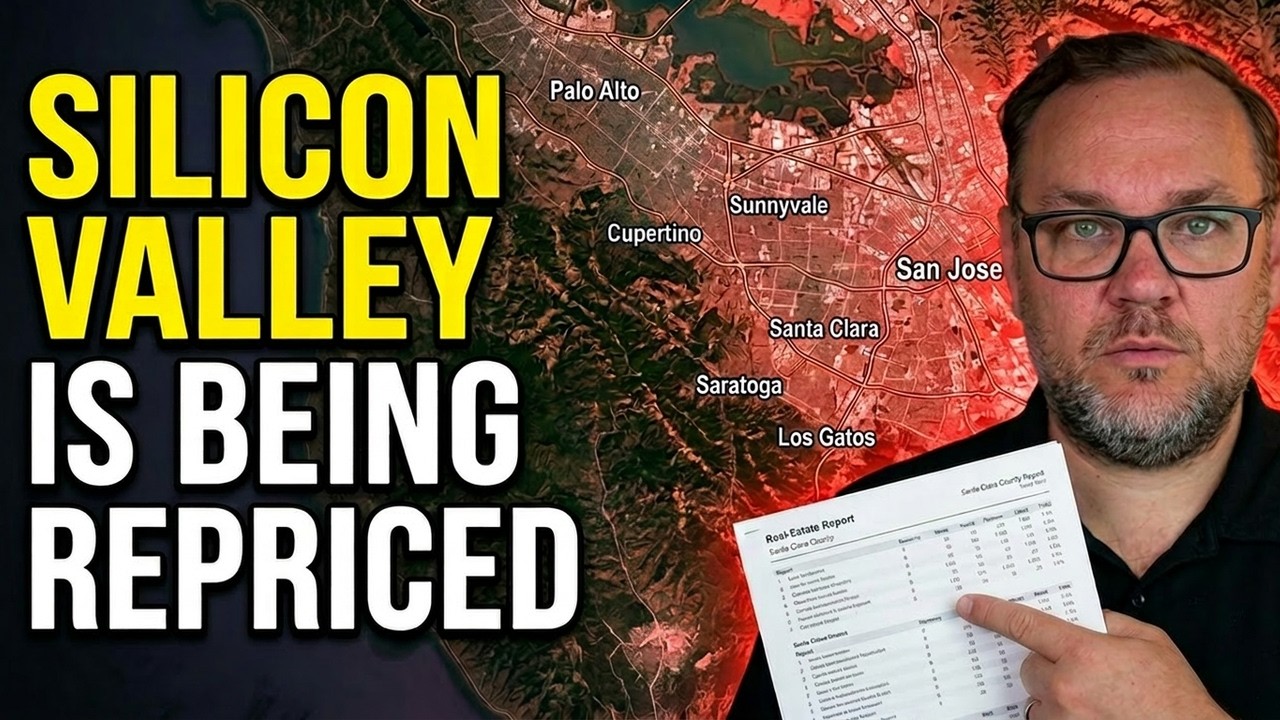
The short answer: Silicon Valley home values are being repriced by five forces at once: AI money at the top, tech layoffs in the middle, inventory that is loosening, insurance costs that change block by block, and micro location. As of June 2026, those forces were pushing different streets in different directions. The county median hides most of it.

Silicon Valley real estate is being repriced right now. Not next year. Now. And it’s not interest rates or the spring market doing it. It’s five changes landing at the same time, and most owners I talk to have heard of maybe one.

I’m third-generation South Bay. I was born in Mountain View, grew up in Almaden, went to Leland High School, and I’ve lived in San Jose, Blossom Valley, Gilroy, and Los Altos. I work this market every day. I’m not going to tell you what’s happening in Sacramento or San Diego. This is what I see on the ground in Santa Clara County.

I walked through all five forces on camera in June 2026.

What’s moving Silicon Valley home values in 2026?

The median price tells one story. The street-by-street data tells another. Here are the five forces in one place.

Force What changed (as of June 2026) Worth Knowing
1. AI money A new tier of buyers with AI-company pay, buying $1.8M to $4M homes The top of the market has more cash and less patience
2. Tech layoffs About 62,000 tech job cuts by April 2026 Move-up sales are freezing in the middle of the market
3. Inventory About 1,032 single-family homes for sale in May 2026, up 6.2% from a year earlier Still low, but buyers got a little leverage back
4. Insurance FAIR Plan rates set to rise about 30% on average Fire zone lines now show up in sale prices
5. Micro location Homes five blocks apart trading in different markets County averages can’t price your street

1. Is AI money changing who buys at the top?

Yes. As of June 2026, the reported median total pay for a senior software engineer at OpenAI was roughly $500,000 to $550,000 a year, with the top end over $1.2 million. At Anthropic, median total pay was around $563,000, and senior engineers were at $700,000 and up. Those are not executive packages. Those are engineers.

That money did not exist in this market three years ago. I’m seeing it at open houses. Buyers paid by OpenAI, Anthropic, Nvidia, xAI, and a long list of AI startups are shopping in the $1.8 million to $4 million range with 30% to 50% down.

The classic top-tier buyer was a staff engineer at Google or Apple with 8 to 15 years at one company, sitting on appreciated stock and shopping in Cupertino, Saratoga, and Los Altos. That buyer still exists. The newer buyer has more cash on hand and is willing to look in places the classic buyer often skipped, like Willow Glen, Cambrian, and Almaden. At three of my last four open houses in the $1.8 million to $2 million range, at least one buyer group had both earners working in AI. A year or two ago that was rare.

What this means if you’re selling at the top

These buyers scan listings on a phone at midnight. The home that wins is the one that shows well on a small screen, which is a different listing plan than what worked five years ago.

2. How are tech layoffs affecting the middle of the market?

While AI labs pay engineers a million dollars a year, the rest of tech is cutting hard. Here’s what I cited in June 2026:

  • About 52,000 tech jobs cut in the first quarter of 2026, and about 62,000 by April. That’s roughly 71% of the full 2025 total in four months.
  • Meta announced about 8,000 cuts in April, with roughly 200 in Burlingame and Sunnyvale.
  • Microsoft offered voluntary retirement to about 8,750 US employees. Oracle cut about 30,000 globally. Amazon cut about 16,000 in the first quarter. Salesforce cut about 4,000 support roles.

These aren’t entry-level cuts. The hardest hit are senior staff and principal engineers with seven or more years at one company. The median time to hire for a senior individual contributor in the Bay Area went from 38 days in the third quarter of 2025 to 67 days in the first quarter of 2026. People who used to land a job in five weeks are now searching for two months or more.

That does two things. First, part of the move-up market froze. The owner who planned to sell in Cambrian and buy in Almaden is waiting six months to see what the next offer letter looks like. Second, some pressure selling is showing up. Not foreclosures, nothing like 2008. People who took a package and decided the math no longer works in California are listing quietly, and those listings are softening specific pockets.

Put forces one and two together and you get a market splitting in two. The Santa Clara County median was about $1.6 million in June 2026, give or take. That number averages a top tier that is still strong with a middle that is softening.

3. Is inventory finally loosening in Santa Clara County?

Yes, a little. Here’s where it stood in May 2026:

Measure (Santa Clara County) May 2026 Long-term comparison
Single-family homes for sale About 1,032 About 2,700 average since 2000 (roughly 38% of normal)
Inventory change, year over year Up 6.2% Condo inventory up almost 13%
Pending sales, year over year Up over 10% The market is moving, not stuck
Days of inventory 39 days 89-day long-term average
Sale-to-list price ratio 105.4% Down from 106.8%

For three years sellers held all the leverage. That has shifted. Not flipped. Shifted. A drop from 106.8% to 105.4% of list price isn’t a crash. It’s a small breath. If you’ve been waiting to buy, this was the first window in six years where reasonable terms were realistic. You’re still competing, but you’re not getting steamrolled.

If you’re selling, price matters again. Listing low and letting offers stack up still works in some neighborhoods. It doesn’t work everywhere. I’m seeing price reductions in pockets that didn’t see them last year.

Update, November 2026: MLSListings data for September 2026 shows single-family inventory in Santa Clara County at 1,223 homes, up 21.2% from a year earlier. The single-family median was $1.9 million, down 3.6% year over year, and homes sold at 103% of list price with a median of 12 days on market. The loosening I described in June kept going.

4. How does insurance change home values here?

This is the one I get asked about least, and it affects more owners I know than anything else on this list. The California FAIR Plan, the state’s insurer of last resort, is raising rates by an average of about 30%. The bigger problem is who is being pushed onto the FAIR Plan in the first place.

Up in Clayton in Contra Costa County, 215 homeowners in a single ZIP code were non-renewed by their private carriers and moved to the FAIR Plan. One ZIP code. That’s not a one-off. That’s a pattern.

Update, November 2026: The California Department of Insurance approved an average FAIR Plan increase of 29.1%, down from the 35.8% the FAIR Plan requested. It applies to policies starting or renewing on or after October 15, 2026. Details are on the Department of Insurance FAIR Plan page and the California FAIR Plan site.

Where it hits in Santa Clara County

The crunch is hardest in wildfire-exposed areas, the wildland urban interface. In our market that means the Almaden foothills, the hills above Los Gatos, the western edge of Saratoga, and the parts of Cupertino that back up to open space. If your home is in one of those zones, you’ve probably gotten a letter from your carrier already, or you will.

On the flat valley floor, like central San Jose, Santa Clara, Sunnyvale, central Cupertino, and central Willow Glen, you’re more insulated. Not immune. Premiums are rising everywhere.

Two homes that look identical online can carry a $15,000, $20,000, or even $30,000 annual insurance gap depending on which side of the fire zone line they sit on. That gap shows up at the closing table. Buyers now ask about insurance on day one, and if coverage is hard to get, they don’t negotiate. They walk. I’ve seen it happen this year.

If you’re selling near a fire zone, get quotes before you list. Know your numbers and have an answer ready when the buyer’s agent asks. A street half a mile down the hill and out of the zone can now be worth more than the street above it with the same view, the same year built, and the same square footage. That’s structural, not cosmetic.

5. Why does micro location matter more than it has in 20 years?

Stack the first four forces together. AI money concentrating at the top. Layoffs squeezing the middle. Inventory loosening. Insurance repricing risk block by block. Together they’ve created something I haven’t seen in my lifetime here: two homes five blocks apart can sit in different markets.

  • Willow Glen: the original Willow Glen near Lincoln Avenue is its own market. South Willow Glen is another. A year ago they trended together. As of June 2026, they didn’t.
  • Cambrian: the west side of Camden Avenue, closer to Los Gatos, is one market. The east side, closer to Branham, is another. The price per square foot gap has widened.
  • Almaden: the flats are one market and the foothills are another. Inside the foothills, the fire hazard zone is a third.

The same split shows up in Evergreen versus Silver Creek, Berryessa versus Alum Rock, and North San Jose versus central San Jose. The variation inside the county is now bigger than the gap between this county and the next one.

If you’re a buyer using an online estimate to set your offer, you’re getting the average of several submarkets plus a guess. You’ll overpay on the wrong side of a line or underbid on the right side. If you’re a seller pricing off what a friend got two years ago, you might leave $50,000 on the table, or sit for 90 days because you priced for the wrong micro market.

What I’d do

  • If you own near a fire zone: get insurance quotes now, before you even think about listing. Your answer to the insurance question is part of your price.
  • If you’re selling at the top: build the listing for a phone screen first. Photos, floor plan, and the first three lines of the description carry the showing.
  • If you’re selling in the middle: price for your block, not the county. Pull the last six months on your side of the line, not your neighbor’s 2022 sale.
  • If you’re buying: use the extra inventory. Ask for inspection time and reasonable terms. Then check which side of every line the home sits on: fire zone, school boundary, and the street-level comps.

Frequently asked questions

Are Silicon Valley home prices dropping in 2026?

It depends on the street and the price tier. As of June 2026 the top of the market was still strong while the middle was softening. MLSListings data for September 2026 showed the Santa Clara County single-family median at $1.9 million, down 3.6% from a year earlier.

How much has inventory gone up in Santa Clara County?

In May 2026 there were about 1,032 single-family homes for sale, up 6.2% year over year but still about 38% of the long-term average. By September 2026, single-family inventory had reached 1,223 homes, up 21.2% from a year earlier.

How much are California FAIR Plan rates going up?

The California Department of Insurance approved an average FAIR Plan increase of 29.1%, below the 35.8% that was requested. It applies to policies starting or renewing on or after October 15, 2026. Your own change depends on your home’s wildfire risk and coverage.

Can wildfire insurance costs lower my home’s value?

They can. Two similar homes can carry a $15,000 to $30,000 annual insurance gap depending on which side of a fire zone line they sit on, and buyers factor that cost into what they’ll pay. Sellers near a fire zone should get quotes before listing.

Why doesn’t my online home estimate match what homes sell for on my street?

Online estimates blend several micro markets into one number. In 2026 homes a few blocks apart can trade differently because of fire zones, insurance, and buyer demand at specific price points. Recent sales on your side of those lines are a better guide.

Is it a better time to buy in Silicon Valley than it was in 2023?

Buyers have more room than they did. In May 2026, homes sold at 105.4% of list price, down from 106.8%, and by September 2026 they sold at 103% of list. You’re still competing, but reasonable terms are more realistic than they were.

Want to know what your home is worth on your block?

Text me at 408-504-0385 and I’ll pull comps for your specific block. It’s a free block-level market analysis for any home in Santa Clara County. No pressure, and no follow-up calls unless you ask for them.

Get a home value estimate · Download my buyers guide

Keep reading

Market figures are as of the month stated and come from my June 2026 video and MLSListings data. Pay figures are reported estimates. Numbers change, so confirm current data before making a decision. This is general information, not legal or tax advice. Talk to a licensed insurance professional about your specific coverage.

Michael Rulfs, REALTOR® | Coldwell Banker Realty | DRE #01832571. Third-generation South Bay. Born here, raised here, still here. 408-504-0385 · michael.rulfs@CBRealty.com
San Jose Real Estate • Silicon Valley Homes • November 3, 2026

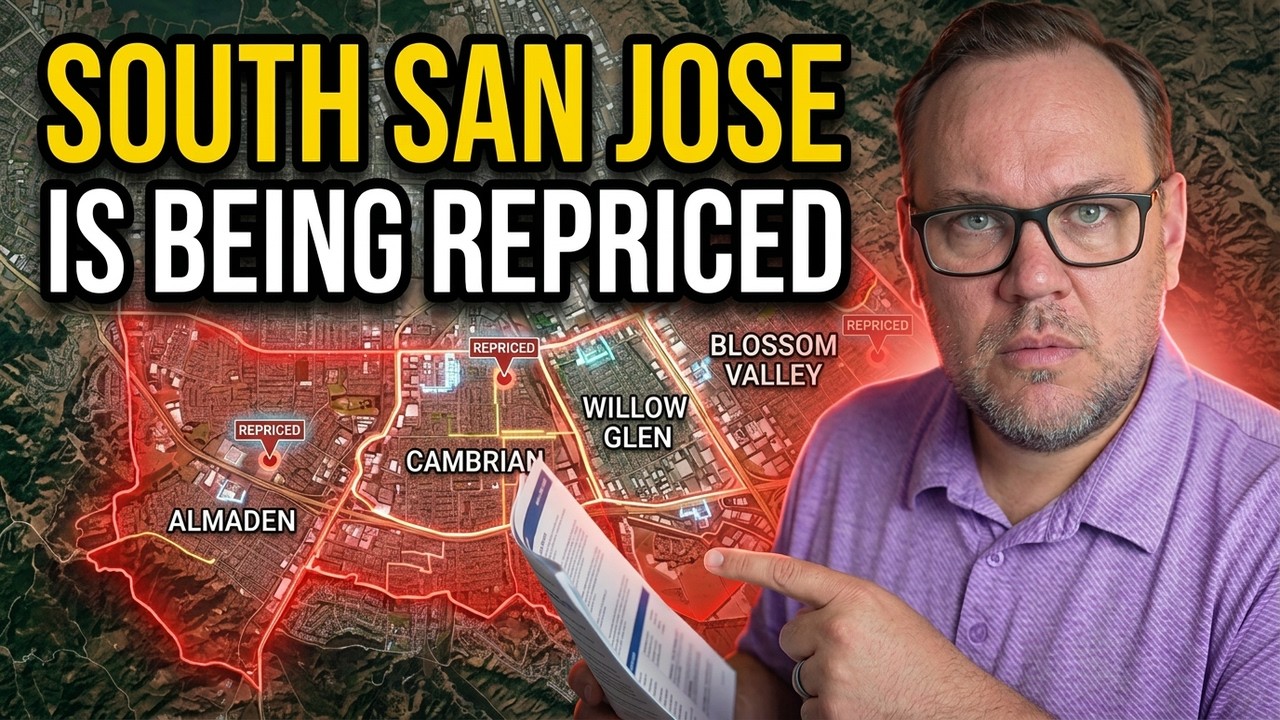
South San Jose Home Values: 6 Changes Most Owners Haven’t Noticed

The short answer: South San Jose home values are being repriced by six forces at once: SB 79’s higher building limits near transit, the light rail link to BART, approved housing at the Blossom Hill and Branham stations, infill in Willow Glen and Cambrian, a protected Coyote Valley, and a grid built for growth. Together they make single-family lots inside South San Jose harder to replace, and that changes both value and timing.

South San Jose is about to be repriced. Not because of one new project, one freeway, or one tech campus. It’s because of a gap between what is about to get built around here and what is allowed to stay a single-family home. Almost nobody pricing houses right now is paying attention to it.

I grew up in Almaden and went to Leland. I have three generations before me in this valley, and they were here before it was called Silicon Valley. I’ve lived in Los Altos, Almaden, downtown San Jose, Blossom Valley, and Gilroy. If you own in Almaden, Cambrian, Willow Glen, Blossom Valley, Santa Teresa, or Evergreen, these six changes affect your house more than any quarterly market report.

I walked through all six on camera in May 2026. This written version adds what has changed since.

Why are South San Jose home values about to change?

If you bought in South San Jose between 1985 and 2018, you bought into a system. A certain kind of street, a certain kind of zoning, a certain commute. That system is being rewritten right now. Some of it in Sacramento, some of it a few miles from your front door.

Here’s the takeaway I want you to keep: the highest and best use of your land over the next ten years is probably not what it was over the last ten. That changes value. It changes timing. And it changes what you should do with the house, even if you have zero plans to move.

1. SB 79 raised the legal ceiling near transit

Governor Newsom signed SB 79 on October 10, 2025, and it took effect on July 1, 2026. In plain English: if your land sits within a half mile of a qualifying transit stop, the state now allows far more housing on it than city zoning used to permit. The closer to the station, the higher the limit.

Distance from the station Light rail stop (Tier 2) BART stop (Tier 1)
Within 200 feet of a station entrance 85 ft, 140 homes per acre 95 ft, 160 homes per acre
Within 1/4 mile 65 ft, 100 homes per acre 75 ft, 120 homes per acre
1/4 to 1/2 mile 55 ft, 80 homes per acre 65 ft, 100 homes per acre

Maximums under Gov. Code § 65912.157, as summarized by ABAG in April 2026. Cities can adopt local alternatives that meet state rules.

This does not mean every lot becomes a seven-story building overnight. It absolutely does not mean the city is going to bulldoze your cul-de-sac. What it means is that the legal ceiling on what can be built near transit just went up. The legal ceiling is the thing that prices land.

South San Jose has more qualifying stops than most owners realize. Draw a half-mile circle around the light rail stations at Blossom Hill, Branham, and along Capitol Expressway, and you start touching parts of Cambrian, Willow Glen, and Blossom Valley. The single-family homes inside those circles just got more valuable as land. Not necessarily as houses, because the legal use of that land has changed.

Worth knowing: the final law keys off rail and bus rapid transit stops. A regular bus line, even a frequent one, doesn’t qualify on its own. If you’re near a light rail station, this applies to you. You can read the state’s overview on the California HCD SB 79 page.

2. Light rail is finally getting a direct link to BART

For 20 years, the joke around here was that VTA would get to BART eventually. Eventually has a date now. The Eastridge to BART Regional Connector is a 2.4-mile elevated light rail extension along Capitol Expressway, from the Alum Rock station to the Eastridge Transit Center, with riders connecting to BART at Milpitas.

Update, November 2026: VTA reported at least 90% of the elevated structure complete in September 2026 and expects the project to be fully finished in early 2028.

The thing that held South San Jose back for two decades isn’t the houses. It’s the commute. Once you can step onto light rail in East San Jose and reach Oakland or San Francisco without a car, the commute premium that pulled buyers north to Sunnyvale and Mountain View starts to compress. It won’t make South San Jose equal to Palo Alto. It will narrow the gap. In my view, narrowing it by even 5% to 8% is enormous in this market.

Now stack that on SB 79. The law keys off transit stops, and this project adds new ones. New transit makes land more valuable, and the law makes it legal to build more on that land. That’s compounding.

3. Housing is already approved next to the stations

This isn’t theoretical. Here’s what is already moving next to South San Jose light rail.

Blossom Hill Station, 605 Blossom Hill Road

The City Council approved the Blossom Hill Station mixed-use project on August 9, 2022. It allows up to 328 homes in two six-story buildings, 239 market-rate and 89 affordable, plus about 22,600 square feet of ground-floor commercial space. As of May 2026, the design was still being adjusted, with the affordable building expected to break ground first.

Branham Station

About a mile and a half away, VTA is planning 45 townhomes on roughly 3 acres of the Park and Ride lot at Branham Lane and Narvaez Avenue. They’re three- and four-bedroom homes, sold as affordable homeownership on a long-term ground lease, with Charities Housing as the developer. VTA calls it a landmark homeownership project. It’s still in planning.

What happens when 300 homes land near you

When a project this size lands in a neighborhood, retail tends to follow: coffee, restaurants, gyms, services. The comp set for nearby single-family homes changes too. You’re no longer only selling to someone who wanted a tract home in Blossom Valley. You’re selling to a renter nearby who got promoted and wants a yard within a short walk of where they live now. That’s how repricing actually happens. Not in headlines. In comps.

4. Willow Glen and Cambrian are getting denser from the inside

A lot of South San Jose owners assume the density push stops at the freeway. It doesn’t.

Willow Glen is quietly getting denser. Not through towers. Through ADUs, small infill apartment buildings on Lincoln Avenue, and a slow shift in what the city will approve on a corner lot. Lot splits have been slow to produce homes here, but the legal path is in place. The character of the neighborhood isn’t changing. The value of each lot is.

The bigger story is Cambrian Park Plaza at Camden and Union. The city’s project page lays out the plan for the 18-acre site:

  • 305 apartments over about 51,000 square feet of retail and restaurants
  • 48 single-family homes with 27 ADUs, plus 25 townhomes
  • A 229-room hotel
  • Senior living with 110 assisted living beds and 50 independent units
  • 4 acres of open space

Here’s the honest part. This project has been stuck. As of May 2026, the current approvals had a time limit, and the developer was working to extend them and build the housing first. That tells me the owner is still committed.

Cambrian has been the quiet middle child of South San Jose for a long time. Not as known as Willow Glen, not as established as Almaden. But it sits in the geographic center of everything: the transit corridors, the new construction, the major roads. When Cambrian Park Plaza moves, Cambrian becomes a real hub instead of a pass-through. If you own in Cambrian, this is your appreciation story for the next five-plus years. Not because of speculation. Because of geography.

5. Coyote Valley is off the table for big development

This is the one almost nobody talks about correctly. In November 2021, the San Jose City Council voted unanimously to switch land in North Coyote Valley from industrial designations to farming and open space. Before that, the city and its partners had already bought and protected hundreds of acres there. The open land between San Jose and Morgan Hill is not coming on the market as large-scale housing or office space in any planning horizon that matters.

It sounds like a lifestyle story. It’s a pricing story. The Bay Area is short hundreds of thousands of homes. The state passed laws to force density. The transit is being built. Demand isn’t going away. And the one big piece of land everyone assumed would absorb the overflow is permanently off the table.

That means new housing has to be built inside the existing footprint: Almaden, Cambrian, Willow Glen, Blossom Valley, Santa Teresa, Evergreen. There’s no escape valve. Single-family lots inside South San Jose become harder and harder to replace. That’s the textbook definition of a repricing event.

6. The power grid is being upgraded for growth

This one almost never makes it into a real estate conversation. In March 2023, the California ISO picked LS Power to build two new high-voltage transmission projects bringing power into the San Jose area. Local grid upgrades are happening across the South Bay too.

It isn’t exciting, but density doesn’t work without grid capacity. Multi-story buildings, EV chargers, heat pumps, and induction stoves pull far more power than the 1970s tract-home infrastructure was built for. Where the grid gets upgraded tells you where the state and utilities expect growth. If your block recently had substation or transformer work, I’d read that as a signal.

Your South San Jose home is really three assets

Put it all together and you own three different things at the same time. Most people only think about the first one.

Asset What it is What’s changing
The house The structure: kitchen, roof, floor plan The least interesting part, and what most valuations focus on
The land The lot your home sits on SB 79 and SB 9 may have changed its legal use, and its value with it
The location A spot inside a fixed footprint Coyote Valley is closed, density is pushed inward, and transit is being built

So when I tell a client the highest and best use of their land over the next ten years probably isn’t what it was over the last ten, this is what I mean. The house you bought in 1998 is, in 2026, a piece of constrained supply on land the state may have just up-zoned. That’s a very different asset than what you bought.

What I’d do if I owned in South San Jose right now

If you’ve been thinking about selling: the question isn’t whether the market is up or down this quarter. It’s whether your block is inside or outside one of those half-mile circles. That changes your timing.

If you’re staying: this might be the year to look seriously at an ADU, a lot split, or a remodel aimed at where the neighborhood is going. The legal options just opened up.

If you plan to pass the house to the next generation: Proposition 19 and SB 79 together create real planning opportunities. It’s worth a conversation with me and your tax advisor before anyone makes a move.

Most owners are still pricing their house off what a neighbor sold for in 2022. That isn’t the right comp anymore. If you want to see how your home’s number looks today, I’d start with what lot size means for value in Almaden Valley and why low inventory keeps pressure on Silicon Valley prices.

Frequently Asked Questions

Does SB 79 mean my neighbor can build a seven-story building?

Only if the lot is close enough to a qualifying station and the project pencils out. Near a light rail stop, the state limit runs from 85 feet right by a station entrance down to 55 feet between a quarter and half mile away. Most single-family streets won’t see towers soon, but the land underneath them is worth more because the option exists.

Which parts of South San Jose are inside SB 79 transit zones?

Land within a half mile of qualifying light rail stations, including Blossom Hill, Branham, and the Capitol Expressway corridor. That reaches into parts of Cambrian, Willow Glen, and Blossom Valley. The regional planning agency publishes the official station map, and I can check a specific address for you.

When will the Eastridge to BART light rail extension open?

VTA expects the 2.4-mile extension to be fully complete in early 2028. As of September 2026, at least 90% of the elevated structure was finished.

Is Coyote Valley going to be developed?

Not for large-scale housing or office. San Jose and its partners have bought and protected land in North Coyote Valley, and in November 2021 the City Council voted unanimously to switch land there from industrial to farming and open space.

Does a zoning change raise my property taxes?

No. Under Proposition 13, your assessed value is based on your purchase price plus a capped annual increase. A zoning change by itself doesn’t trigger a reassessment. New construction, like an ADU, is assessed when it’s added.

What’s happening with Cambrian Park Plaza?

The plan for the 18-acre site at Camden and Union includes 305 apartments, 48 single-family homes with 27 ADUs, 25 townhomes, a 229-room hotel, senior living, and retail. As of May 2026, the developer was working to extend its approvals and build the housing first.

Should I sell my South San Jose home now or wait?

It depends on where your block sits. A home inside a transit zone may gain value as land, which can favor waiting or adding an ADU. A home outside one competes more on condition and price. I’ll walk you through your specific street before you decide.

Want to know what this means for your street?

Not a market report. Not a brochure. An actual sit-down with the data on your block: what’s coming, what’s already approved, and what your comps look like today. Text me at 408-504-0385. It’s free, no obligation, and I’ll tell you straight if there’s nothing to do right now.

Curious what your home is worth today? Get a home value estimate or send me a message.

Keep reading

Project details and figures reflect public information as of the dates noted. The video was recorded in May 2026, and updates were checked in November 2026. Plans and timelines change. Information deemed reliable but not guaranteed. This is general information, not legal or tax advice.

Michael Rulfs, REALTOR® | Coldwell Banker Realty | DRE #01832571

Third-generation South Bay. Born here, raised here, still here.

408-504-0385 · michael.rulfs@CBRealty.com · YouTube

Home Tour • San Jose Rea Estate • April 15, 2026

Almaden Valley Homes Under $2.5M: Why a 10,000 Sq Ft Lot Matters


Almaden $2.4M home

Almaden Valley Homes Under $2.5M: Why a 10,000 Sq Ft Lot Matters

What does $2.4 million actually get you in Almaden Valley right now?

In the 95120 zip code, $2.4 million currently buys a 5-bedroom, single-level home on a 10,080 square foot lot — like the Lenwood Way property featured in this tour. That’s a meaningful upgrade in land and livability over what the same budget gets you in Palo Alto or Los Gatos. For tech families who want space, top-rated San Jose Unified schools, and access to Quicksilver County Park, Almaden Valley is the current Silicon Valley sweet spot.

By Michael Rulfs | April 14, 2026

If you’ve been watching the Silicon Valley market in 2026, you’ve probably noticed that lot sizes have quietly become one of the most underpriced assets in the region. A lot of the headline pricing focuses on square footage and finish quality. The real long-term value, in my experience working with buyers across Santa Clara County, is in the dirt.

This week I toured a 5-bedroom ranch on Lenwood Way in Almaden Valley priced at $2,400,000. It sits on a 10,080 square foot lot — about 0.23 acres — in the heart of 95120. Watch the full tour, then keep reading for why this kind of property keeps outperforming in this price band.

Why the lot size matters more than the listing photos

Most homes in this $2.4M to $2.6M Silicon Valley price band get squeezed onto 6,000 square foot lots. That’s the new construction default, and it’s what you typically see in the closer-in San Jose pockets and along the 280 corridor.

A 10,000+ square foot lot changes the math. You’re not just buying a yard — you’re buying optionality. That includes:

  • ADU potential. California’s relaxed ADU rules make a detached unit feasible on this kind of lot, whether for rental income, multi-generational living, or a home office
  • Outdoor entertaining. Pool, outdoor kitchen, putting green, sport court — all on the table in a way they simply aren’t on a 6,000 sq ft parcel
  • Resale defensibility. Land value tends to hold and appreciate even when finishes go out of style. A bigger lot is a hedge against future market shifts
  • Privacy. More setback from neighbors, more tree canopy, more breathing room — quality of life that’s hard to put a number on but easy to feel

For high-earner tech buyers used to evaluating tradeoffs, this is the kind of analysis that should sit at the front of the home search, not the back.

The Almaden Valley case for tech families

Almaden Valley has been a quiet outperformer for years. The pull is straightforward:

  • San Jose Unified schools. Almaden’s schools rank consistently among the top public options in the city, which keeps family demand steady regardless of what’s happening in the broader market
  • Outdoor access. Quicksilver County Park and the Almaden foothills are right there. For families who want trail running, mountain biking, and weekend hiking without a long drive, this is the move
  • Price-to-space value. You can step into a meaningful single-family home on a real lot for under $2.5M, which is increasingly rare in Santa Clara County
  • Neighborhood character. The streets are mature, low-traffic, and family-paced, which a lot of Bay Area neighborhoods have lost as they’ve densified

The tradeoff is the commute. Almaden is further south than Cupertino or West San Jose, so if you’re driving daily to Apple Park, Nvidia, or Meta, you’re looking at a longer drive than you’d have from Westgate or Happy Valley. For a lot of buyers — especially hybrid or fully remote tech workers — that’s a fair trade for the extra space and the schools.


Thinking about selling your Almaden Valley home in the next 6 to 12 months? See what your home could actually sell for in today’s market. Get your free home valuation here.


What to look for inside the home

The Lenwood Way tour walks through the interior in detail, but a few things are worth pulling out for buyers comparing this property to others in the price band.

Single-level layout. Single-story homes are increasingly rare in this price tier and they command a premium. They appeal to a wider buyer pool — including aging-in-place buyers and families who want easier flow — which makes them a stronger long-term hold.

Kitchen and living analysis. The heart of the home is where most of your day actually happens. Pay attention to natural light, flow into the backyard, and whether the kitchen has been opened up to the living area. Closed-off floor plans are harder to fix than they look.

Primary suite features. Walk-in closet, separated bathroom, and direct yard access are the three things that separate a “good” primary suite from one that justifies the price tag.

Backyard usability. A 10,000 sq ft lot only matters if the yard is actually usable — flat, sun-exposed, and accessible from the main living areas. Walk it carefully.

How to think about pricing in 95120 right now

The “Almaden for $2.4M to $2.6M” band is where the most action is happening in this market. Below that range, you’re typically getting smaller lots or homes that need significant work. Above it, you start running into the same diminishing returns that hit Saratoga and Los Gatos at higher price points.

If you’re a buyer, the key question is: does the property leave room for the lot value to do the work over the next 5 to 10 years? A larger lot in a strong school district almost always answers yes.

If you’re a seller in 95120, this is a market where the right strategy can pull buyers from across the Bay Area — especially out-of-state tech relocators who are increasingly comparing Almaden to Bellevue, Austin, and Boulder. Good photography, drone footage of the lot, and a clear pricing strategy matter more here than they do in tighter-density neighborhoods.

The bottom line on Almaden Valley value plays

If you’re in the $2.4M to $2.6M Silicon Valley budget and you want space, schools, and long-term resale strength, Almaden Valley is one of the best uses of that dollar in Santa Clara County right now. The Lenwood Way property is a clean example of what that looks like in practice — but the broader principle (buy the lot, not just the house) is the takeaway worth keeping.

If you want to see what your Almaden home is worth in this market, or you want help finding the right large-lot property in 95120, reach out and we’ll map out a strategy. I’ll give you the real numbers — recent comps, days on market, what’s hitting and what’s sitting — not the headline version.


About Michael Rulfs
Michael Rulfs is a Silicon Valley real estate agent with Coldwell Banker Realty, specializing in helping buyers and sellers navigate the Santa Clara County market with clarity and confidence. He combines data-driven insights, strong negotiation skills, and high-end video marketing to position homes and clients for the best possible outcome. Michael primarily serves move-up buyers, sellers, and tech professionals across San Jose and surrounding areas. Connect with him at rulfsrealestate.com or on YouTube at @RulfsRealEstate.


San Jose Rea Estate • April 15, 2026

Living in Westgate San Jose: The Silicon Valley Commute Hub

Happy Valley San Jose


Living in Westgate San Jose: The Silicon Valley Commute Hub

What makes Westgate San Jose one of the best neighborhoods for tech commuters?

Westgate and the adjacent Happy Valley pocket sit at the corner of Saratoga, Cupertino, and West San Jose, with direct access to Highways 85 and 280 and Lawrence Expressway. That location puts Apple Park, Nvidia, Meta, and Google within a 15 to 25 minute drive on most days, while keeping you in tree-lined, family-oriented streets near a top elementary school. For tech buyers comparing commute, schools, and cost, this corner of 95129 is one of the most consistent performers in Santa Clara County.

By Michael Rulfs | April 14, 2026

If you’ve been searching San Jose listings and the price-per-square-foot keeps surprising you, the Westgate and Happy Valley pocket is worth a closer look. It’s one of those areas that doesn’t always show up in the obvious neighborhood searches — but the people who live here tend to stay for decades, and the homes that hit the market move fast.

Last week I drove through the streets around Country Lane Elementary, between Saratoga Avenue and Prospect Road, to show what daily life actually looks like here. Watch the full driving tour below — then keep reading for the buyer’s-eye breakdown.

Where Westgate and Happy Valley actually sit on the map

Most people lump this whole area into “West San Jose,” but the local pocket has its own character. Happy Valley sits just inside the San Jose city line, bordered by Saratoga to the south and Cupertino to the north. You’re a five-minute drive from downtown Saratoga’s Michelin-rated dining and a ten-minute drive from Apple Park.

The streets feel different from newer parts of San Jose. Most of the homes were built decades ago, and the trees have grown into a real canopy. Drive Terracea, Graves, or Brenton on a weekday morning and you’ll see what I mean — quiet, mature, and family-paced.

Watch Michael walk through the school zone insights at 0:30.

The “Nvidia commute” — why this pocket wins on access

If you work at Nvidia, Apple, Meta, or any of the bigger campuses spread across the 280 corridor and Lawrence Expressway, the math is simple. Lawrence Expressway runs straight north into Nvidia’s headquarters. Highway 85 picks you up two minutes from these streets. Highway 280 is a short hop further north.

That gives you three real commute routes — which matters more than people realize. When 280 backs up, you take Lawrence. When Lawrence is slow, you cut through Saratoga Avenue. You’re not stuck on a single artery the way you are in some of the newer master-planned communities further south.

Buyers I work with who land here usually tell me the same thing six months in: the commute stopped being something they thought about. That’s the goal.

Schools, parks, and the family pull

Country Lane Elementary is the anchor for a lot of the families who buy here. It’s the school most often pulled up in Greatschools comparisons against Cupertino and Saratoga, and it’s walkable from a meaningful chunk of the streets in this pocket.

Prospect High serves the area for public high school. If private is on the table, Archbishop Mitty sits a few minutes east and is one of the most sought-after Catholic high schools in the region. The combined public-and-private optionality is part of why families don’t move out of here once they’re in.

One question that comes up a lot: is living next to an elementary school a pro or a con? The honest answer is both. If you have young kids, the daily walk and the community feel is a real benefit. If you’re past the school years and you’re sensitive to morning drop-off traffic, you might want to be a few blocks off the school zone instead of right on it. Same logic applies to homes that back up to neighborhood parks.


Want hyper-local updates like this for your neighborhood — pricing, recent sales, and which streets are moving fastest? Reach out and I’ll send you a custom breakdown.


Daily life: Westgate, El Paseo, and what’s coming

Westgate Center is the local shopping anchor. It’s not glamorous, but it works — Buffalo Wild Wings, Jack’s Restaurant, a popular gym in the old 49er Fit space, and the kind of running-errands convenience that makes a neighborhood actually liveable.

Across Saratoga Avenue, El Paseo de Saratoga is in the middle of a major reimagining. The current plan brings in Whole Foods, additional restaurants, and a refreshed center over the next few years. You can already see the cranes from the surrounding streets. When that project lands, it pulls comps in this whole pocket up with it — that’s worth thinking about if you’re buying now.

For coffee and groceries, Philz, Sprouts, Trader Joe’s, and a Boudin Bakery sourdough fix are all within a couple of minutes. Michael walks through the local favorites at 9:08.

What this means if you’re a buyer

If you’re a tech family weighing Cupertino, Saratoga, Los Gatos, and West San Jose, the Westgate / Happy Valley pocket is the value play. You typically pay less than you would for a comparable home a few blocks north or south, and you get the same commute and most of the same lifestyle.

The tradeoff is that inventory is thin. These homes don’t come up that often, and when they do, they tend to attract multiple offers. If this pocket is on your list, you want to be set up to move quickly — pre-approved, clear on your numbers, and ready to write. Here’s how to compete in a low-inventory Silicon Valley market if you want a deeper read on that.

What this means if you’re a seller

If you already own here, the El Paseo redevelopment, the long-term commute story, and the consistent family demand are all working in your favor. The market here doesn’t swing the way some of the newer San Jose tracts do — pricing tends to hold, and the right marketing strategy can pull buyers from a much wider radius (especially tech buyers relocating from out of state).

You can pull a free, no-pressure valuation of your home here if you want a real-time benchmark before deciding anything.

The bottom line on Westgate and Happy Valley San Jose

You’re getting a quiet, mature pocket of San Jose with three commute routes to the biggest tech employers in the country, a top elementary feeder, two strong shopping centers (with a major upgrade landing soon), and proximity to Saratoga and Cupertino without paying the full Saratoga or Cupertino premium. That’s a rare combination in this market.

If you’re weighing a move into the area or you already own here and want to know what your home is worth right now, reach out and we’ll map it out. I work with buyers and sellers across Santa Clara County every week, and I’ll give you the real numbers — not the marketing version.


About Michael Rulfs
Michael Rulfs is a Silicon Valley real estate agent with Coldwell Banker Realty, specializing in helping buyers and sellers navigate the Santa Clara County market with clarity and confidence. He combines data-driven insights, strong negotiation skills, and high-end video marketing to position homes and clients for the best possible outcome. Michael primarily serves move-up buyers, sellers, and tech professionals across San Jose and surrounding areas. Connect with him at rulfsrealestate.com or on YouTube at @RulfsRealEstate.


San Jose • San Jose Rea Estate • Selling • Silicon Valley Homes • February 13, 2026

Should You Sell Your Home If You Relocate for Work? A Silicon Valley Homeowner’s Decision Guide

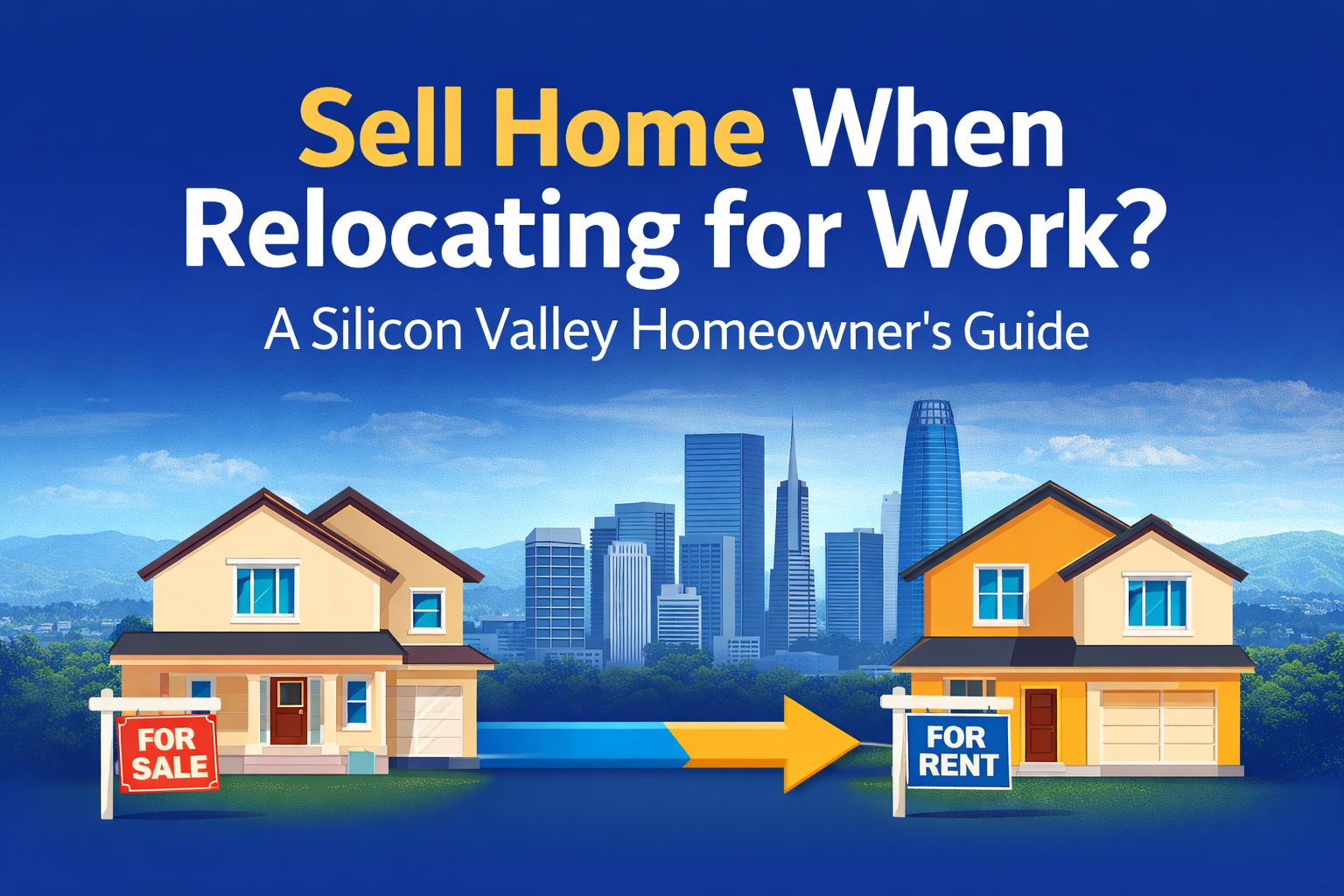
Many homeowners ask whether they should sell home when relocating for work or hold the property as an investment.Relocating for work sounds straightforward until the housing decision hits. Sell the home or hold onto it. In Silicon Valley, that choice carries more weight than in most markets because prices, appreciation, and loan terms can create long-term financial consequences.

This guide breaks down how to evaluate the decision logically. You’ll understand when selling makes sense, when keeping the property can build wealth, and how to think through the risks before committing either way.

When to Sell Your Home When Relocating for Work

The biggest driver of the decision is how long you expect to be gone.

Short-term relocation often favors holding the home. Silicon Valley home values tend to trend upward over time, and re-entering the market later can be significantly more expensive.

Long-term relocation shifts the equation. If you don’t plan to return or expect to establish roots elsewhere, selling may simplify finances and free up capital for your next purchase.

Key questions to answer:

  • Is the move temporary or permanent

  • Could you be transferred back

  • Do you want the option to return

  • How stable is your new job location

The longer the uncertainty, the more valuable flexibility becomes. Holding the property preserves optionality.

Mortgage Rates and Selling Your Home When Relocating

Your current mortgage rate may be your most valuable financial asset.

Many Silicon Valley homeowners locked in historically low interest rates. Replacing a 2–3% loan with a future 6–7% loan can dramatically increase monthly costs, even if home prices remain similar.

Keeping a low-rate mortgage can create three advantages:

  • Lower long-term borrowing cost

  • Higher cash flow potential if rented

  • Easier re-entry if you return

Selling removes that advantage permanently. Once the loan is gone, it’s gone.

Renting vs Selling Your Home When Relocating for Work

For many relocating tech professionals, renting the home is the most strategic move.

If rental income covers the mortgage and expenses, the property can:

  • Build equity over time

  • Appreciate in value

  • Be paid down by tenants

  • Serve as a future primary residence or investment

Example:

If a $2,000,000 home appreciates at 6% annually, that equals about $120,000 in value growth per year. Some years are higher, some lower, but long-term Silicon Valley trends have rewarded holding property.

Meanwhile, tenants are reducing the loan balance each month.

That combination compounds wealth quietly in the background.

Risks to Consider With Renting

  • Maintenance costs

  • Vacancy periods

  • Property management needs

  • Tenant risk

These are manageable but real. The decision should include both upside and operational responsibility.

When Selling Is the Smarter Financial Move

Holding a home is not always the right choice.

Selling makes sense when:

  • You need equity for a down payment in the new city

  • Rental income would not cover expenses

  • You don’t want landlord responsibilities

  • The new job is clearly long term

  • You want simplicity and liquidity

There’s also emotional bandwidth to consider. Managing a property from another state adds friction. For some homeowners, peace of mind outweighs long-term appreciation potential.

Tax and Financial Strategy Should Guide the Decision

This is not just a real estate decision. It’s a financial planning decision.

Primary residence tax benefits may apply if you sell within eligibility windows. Rental conversion changes how the property is treated for taxes and deductions.

Financial considerations include:

  • Capital gains exposure

  • Rental income tax treatment

  • Depreciation benefits

  • Property tax implications

  • Cost basis for future sale

Each path has different tax outcomes. Structuring the move intentionally matters.

How Silicon Valley Market Dynamics Affect the Choice

This market behaves differently than most.

Supply is constrained. Job growth remains strong. High-income buyers continue entering the region. Over time, those forces tend to push prices upward.

Re-buying later often costs more than holding through a relocation.

That’s why many relocating tech professionals choose to keep their property even if it only breaks even in the short term. The long-term positioning can be powerful.

A Simple Decision Framework

Use this framework before making a move:

  1. Define your relocation timeline

  2. Compare your current mortgage rate to today’s rates

  3. Run a rental cash flow analysis

  4. Identify how much equity you would access by selling

  5. Consider tax consequences of each path

  6. Decide based on long-term financial goals, not short-term convenience

There is no universal answer. The right decision depends on your job stability, financial position, and future plans.

Conclusion

Deciding whether to sell home when relocating for work depends on your timeline, finances, and long-term plans.Relocating for work does not automatically mean you should sell your home. In Silicon Valley, holding property can preserve low borrowing costs, build equity, and position you for long-term appreciation.

Selling may be the better move when liquidity, simplicity, or a permanent relocation outweigh those benefits.

The smartest approach is not emotional. It’s strategic, numbers-driven, and aligned with where you expect your life and career to go next.

Call to Action

If you’re relocating and weighing whether to sell or hold, get a personalized analysis based on your loan, equity, and rental potential. The right strategy depends on your exact numbers and timeline.

Uncategorized • October 2, 2025

Why October Is the Best Time To Buy a Home in 2025

If you’ve been watching from the sidelines, now’s the time to lean in. It’s officially the best time to buy this year. According to Realtor.com, this October will have the most buyer-friendly conditions of any month in 2025:

“By mid-October, buyers across much of the country may finally find the combination of inventory, pricing, and negotiating power they’ve been waiting for—a rare opportunity in a market that has been tight for most of the past decade.”

So, if you’re ready and able to buy right now, shooting for this month means you should see:

  • More homes to choose from
  • Less competition from other buyers
  • More time to browse
  • Better home prices
  • Sellers who are more willing to negotiate

Just remember, every market is different. For most of the top 50 largest metros, that sweet spot falls in October. But the peak time to buy may be slightly earlier or later, depending on where you live. As Realtor.com explains:

“While Oct. 12–18 is the national “Best Week,” timing can shift depending on the local markets. . .”

Best Week To Buy for the Top 50 Largest Metro Areas

  • Atlanta-Sandy Springs-Roswell, GA: September 28 – October 4
  • Austin-Round Rock-San Marcos, TX: September 28 – October 4
  • Baltimore-Columbia-Towson, MD: October 12 – 18
  • Birmingham, AL: October 19 – 25
  • Boston-Cambridge-Newton, MA-NH: October 26 – November 1
  • Buffalo-Cheektowaga, NY: October 12 – 18
  • Charlotte-Concord-Gastonia, NC-SC: November 2 – 8
  • Chicago-Naperville-Elgin, IL-IN: September 28 – October 4
  • Cincinnati, OH-KY-IN: October 12 – 18
  • Cleveland, OH: October 12 – 18
  • Columbus, OH: October 12 – 18
  • Dallas-Fort Worth-Arlington, TX: September 28 – October 4
  • Denver-Aurora-Centennial, CO: October 12 – 18
  • Detroit-Warren-Dearborn, MI: October 12 – 18
  • Grand Rapids-Wyoming-Kentwood, MI: September 28 – October 4
  • Hartford-West Hartford-East Hartford, CT: September 21 – 27
  • Houston-Pasadena-The Woodlands, TX: October 12 – 18
  • Indianapolis-Carmel-Greenwood, IN: October 26 – November 1
  • Jacksonville, FL: October 26 – November 1
  • Kansas City, MO-KS: October 12 – 18
  • Las Vegas-Henderson-North Las Vegas, NV: October 5 – 11
  • Los Angeles-Long Beach-Anaheim, CA: October 12 – 18
  • Louisville/Jefferson County, KY-IN: November 2 – 8
  • Memphis, TN-MS-AR: September 21 – 27
  • Miami-Fort Lauderdale-West Palm Beach, FL: November 30 – December 6
  • Milwaukee-Waukesha, WI: September 7 – 13
  • Minneapolis-St. Paul-Bloomington, MN-WI: October 26 – November 1
  • Nashville-Davidson–Murfreesboro–Franklin, TN: October 12 – 18
  • New York-Newark-Jersey City, NY-NJ: September 14 – 20
  • Oklahoma City, OK: October 12 – 18
  • Orlando-Kissimmee-Sanford, FL: October 26 – November 1
  • Philadelphia-Camden-Wilmington, PA-NJ-DE-MD: September 7 – 13
  • Phoenix-Mesa-Chandler, AZ: November 2 – 8
  • Pittsburgh, PA: October 12 – 18
  • Portland-Vancouver-Hillsboro, OR-WA: October 26 – November 1
  • Providence-Warwick, RI-MA: October 19 – 25
  • Raleigh-Cary, NC: October 12 – 18
  • Richmond, VA: October 26 – November 1
  • Riverside-San Bernardino-Ontario, CA: September 28 – October 4
  • Sacramento-Roseville-Folsom, CA: October 12 – 18
  • San Antonio-New Braunfels, TX: October 12 – 18
  • San Diego-Chula Vista-Carlsbad, CA: October 12 – 18
  • San Francisco-Oakland-Fremont, CA: October 12 – 18
  • San Jose-Sunnyvale-Santa Clara, CA: October 19 – 25
  • Seattle-Tacoma-Bellevue, WA: October 19 – 25
  • St. Louis, MO-IL: October 12 – 18
  • Tampa-St. Petersburg-Clearwater, FL: November 30 – December 6
  • Tucson, AZ: October 12 – 18
  • Virginia Beach-Chesapeake-Norfolk, VA-NC: September 21 – 27
  • Washington-Arlington-Alexandria, DC-VA-MD-WV: October 12 – 18

What the Experts Are Saying

And Realtor.com isn’t the only one saying you’ve got an opportunity if you move now. Lawrence Yun, Chief Economist at the National Association of Realtors (NAR), explains:

“Homebuyers are in the best position in more than five years to find the right home and negotiate for a better price. Current inventory is at its highest since May 2020, during the COVID lockdown.”

Daryl Fairweather, Chief Economist at Redfin, puts it like this:

“Nationally, now is a good time to buy, if you can afford it . . . with falling mortgage rates and significantly more inventory, buyers have an upper hand in negotiations.”

And NerdWallet says:

“This fall just might be the best window for home buyers in the past five years.”

How To Get Ready for this Golden Window

To make sure you’re ready to jump in whenever your market’s best time to buy arrives, talk to a local agent now. They’ll be able to give you more information on your market’s peak time, why it’s good for you, and the steps you’ll need to take to get ready.

Bottom Line

If you’re serious about buying, getting prepped for this October window is a smart play.

Want help lining up your strategy? Let’s have a quick conversation so you’ve got the information you need to be ready for this prime buying time.

San Jose • San Jose Rea Estate • San Jose Real Estate • Selling • September 30, 2025

Downsizing Without Debt: How More Homeowners Are Buying Their Next House in Cash

If you’ve been thinking about downsizing to lower your expenses, be closer to family, or just make life easier, here’s a trend worth paying attention to:

More homeowners are buying their next house outright, without taking on a new mortgage. And, if you’ve owned your home for a while, you may be able to do the same. No mortgage. No monthly housing payments.

A Record Share of Homeowners Are Mortgage-Free

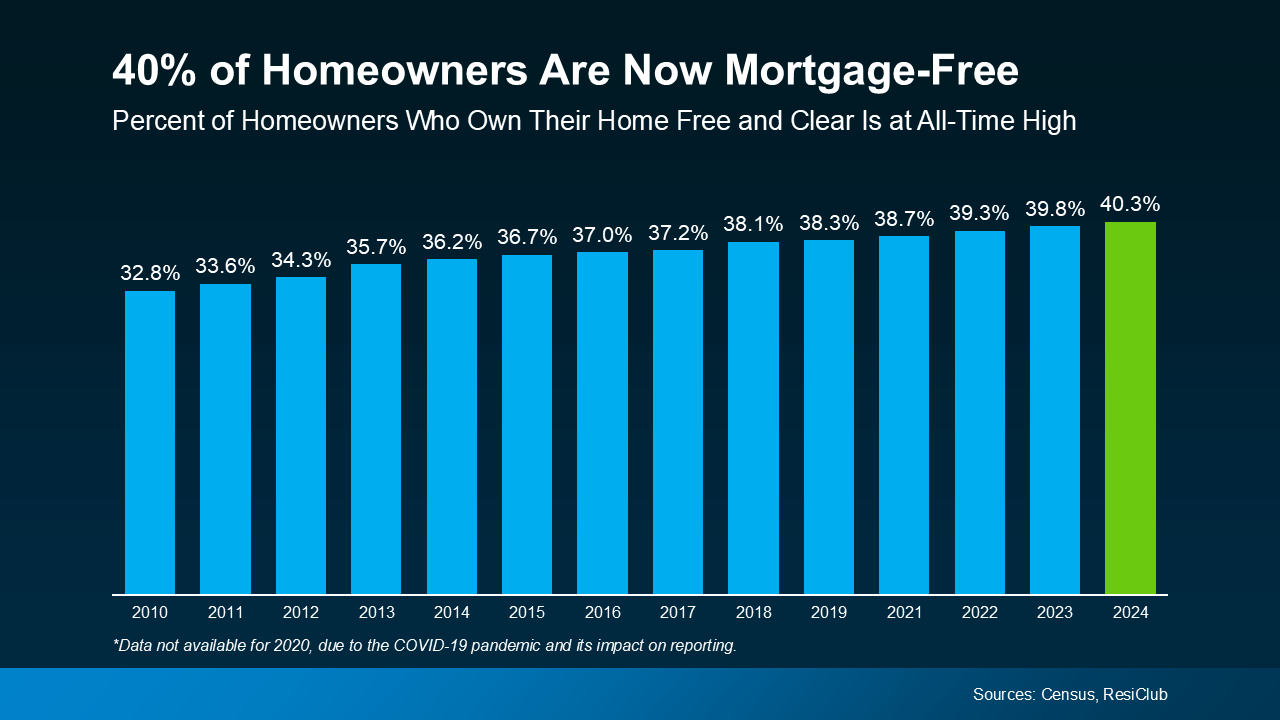
According to analysis from ResiClub of Census data, more than 40% of U.S. owner-occupied homes are mortgage-free – an all-time high for this data series. That means 4 in 10 homeowners own their homes free and clear (see graph below):

a graph of a number of blue barsOne big reason for this trend? Demographics. As Baby Boomers age and stay in their homes longer, many have had the time to fully pay off their mortgages. You might be in that group too and not even realize just how much buying power you now have. It’s time to change that.

How Downsizers Are Turning Equity into Buying Power

As a homeowner, your equity is your biggest advantage in today’s market. If you’re mortgage-free (or close to it), it could give you the power to buy your next home in cash. That means you’d still have no mortgage payment in retirement, plus:

  • Less financial stress as you age
  • More cash flow, if you purchase a less expensive home
  • And it would likely be a faster, simpler transaction

Here’s how it works. You’d sell your current house and use the proceeds to buy your next house in cash. And while that may sound like something you thought would never be possible for you, it’s more realistic than you may think.

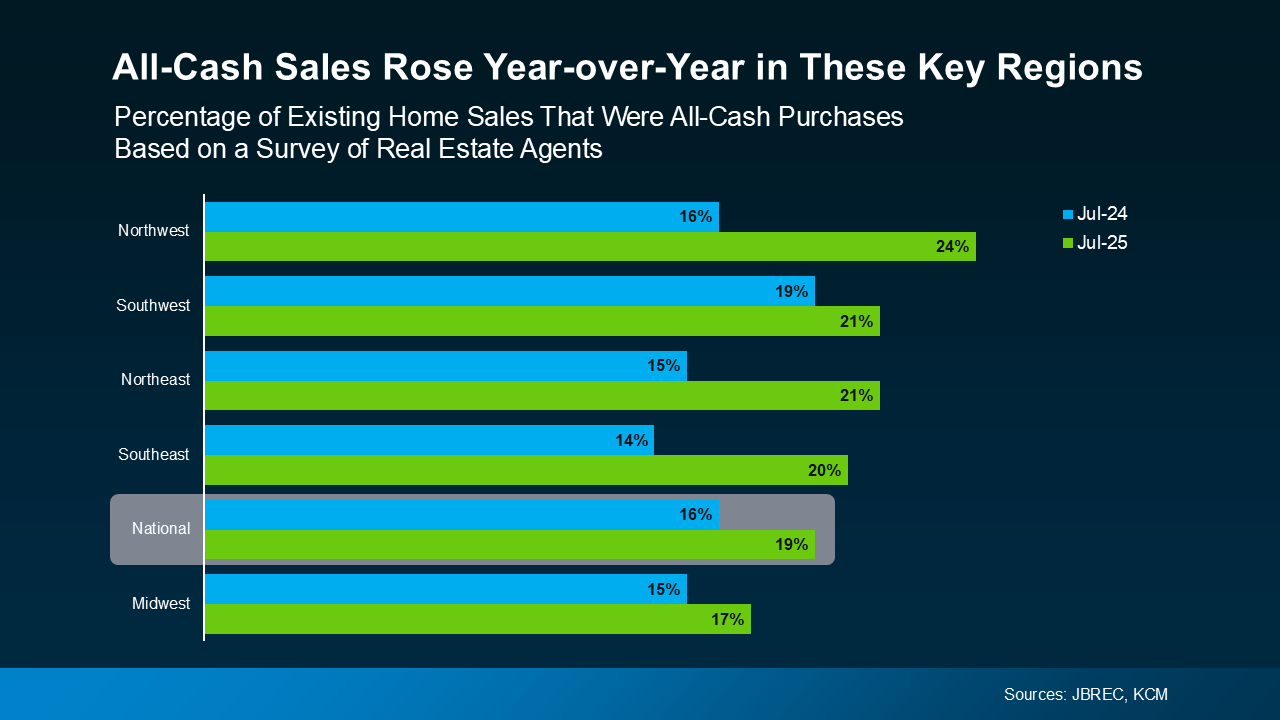
In the latest survey from John Burns Research and Consulting (JBREC) and Keeping Current Matters (KCM), agents reported the share of purchases with all-cash buyers is climbing nationally. And those agents are seeing increases in almost every region of the country (see graph below):

a graph of salesFor Baby Boomers especially, buying in cash gives you more control over your next chapter. You could buy a smaller, less expensive home and have lower costs, less upkeep, and more flexibility to enjoy what matters most. All while staying debt and stress free.

Because downsizing isn’t about downgrading your home. It’s about upgrading your quality of life. And that’s something worth exploring.

Bottom Line

You’ve worked hard for your home. Now it might be time for it to work hard for you.

Let’s talk about what your house is worth, and what it could unlock for you today. What would your ideal home look like if you were to downsize right now?

Uncategorized • September 30, 2025

Closing Costs Unpacked: State-by-State Breakdowns for Today’s Buyers

If you’re planning to buy a home this year, there’s one expense you can’t afford to overlook: closing costs.

Almost every buyer knows they exist, but not that many know exactly what they cover, or how different they can be based on where you’re buying. So, let’s break them down.

What Are Closing Costs?

Your closing costs are the additional fees and payments you make when finalizing your home purchase. Every buyer has them. According to Freddie Mac, they typically include things like homeowner insurance and title insurance, as well as various fees for your:

  • Loan application
  • Credit report
  • Loan origination
  • Home appraisal
  • Home inspection
  • Property survey
  • Attorney

National vs. Local: Why the Numbers Look So Different

When you search for information about closing costs online, you’ll often see a national range, usually 2% to 5% of the home’s purchase price. While that’s a useful starting point if you’re working on your homebuying budget, it doesn’t tell the whole story. In reality, your closing costs will also vary based on:

  • Taxes and fees where you live (like transfer taxes and recording fees)
  • Service costs for things like title and attorney work in your local area

While the home price is obviously going to matter, state laws, tax rates, and even the going costs for title and attorney services can change what you expect to pay. That’s why it’s important to talk to the pros ahead of time so you know what to budget for. It can put you in control before you even start shopping.

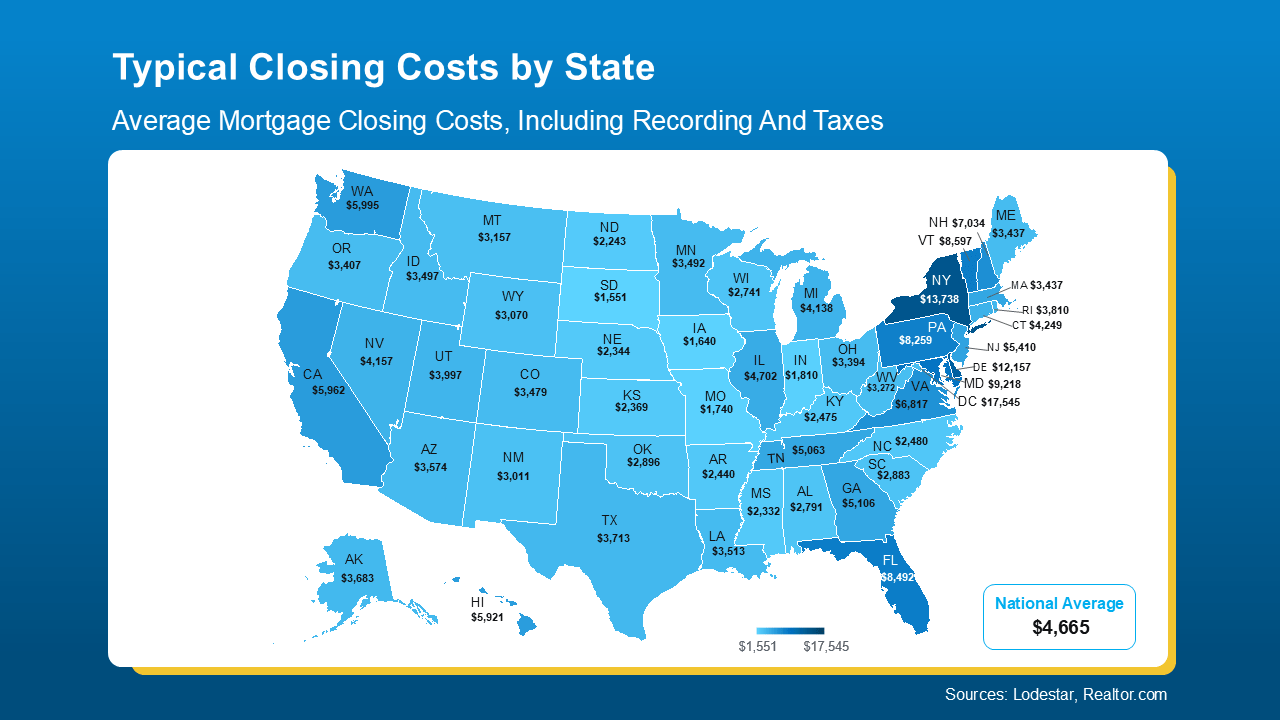
To give you a rough ballpark, here’s a state-by-state look at typical closing costs right now based on those factors for the median-priced home in each state (see map below):

As the map shows, in some states, typical closing costs are just roughly $1-3K. In a few places, they can be closer to $10-15K. That’s a big swing, especially if you’re buying your first home. And that’s why knowing what to expect matters.

If you want a real number to help with your budget, your best bet is to talk to a local agent and a lender. They can run the math for your price range, loan type, and exact location.

And just in case you’re looking at your state’s number and wondering if there’s any way to trim that bill, NerdWallet shares a few strategies that can help:

  • Negotiate with the seller. Ask for concessions like a credit toward your closing costs.
  • Shop around for homeowner’s insurance. Compare coverage and rates before you commit.
  • Check for assistance programs. Some states, professions, and neighborhoods offer help. Your agent and lender can point you to what’s available locally.

Bottom Line

Closing costs are a key part of buying a home, but they can vary more than most people realize. Knowing your numbers (and how to potentially bring them down) can go a long way and help you feel confident about your purchase.

Let’s look at typical closing costs in our area and get you a personalized estimate, so you can craft your ideal budget.

San Jose • San Jose Real Estate • Selling • Silicon Valley Homes • September 25, 2025

Why Buyers and Sellers Face Very Different Conditions Today

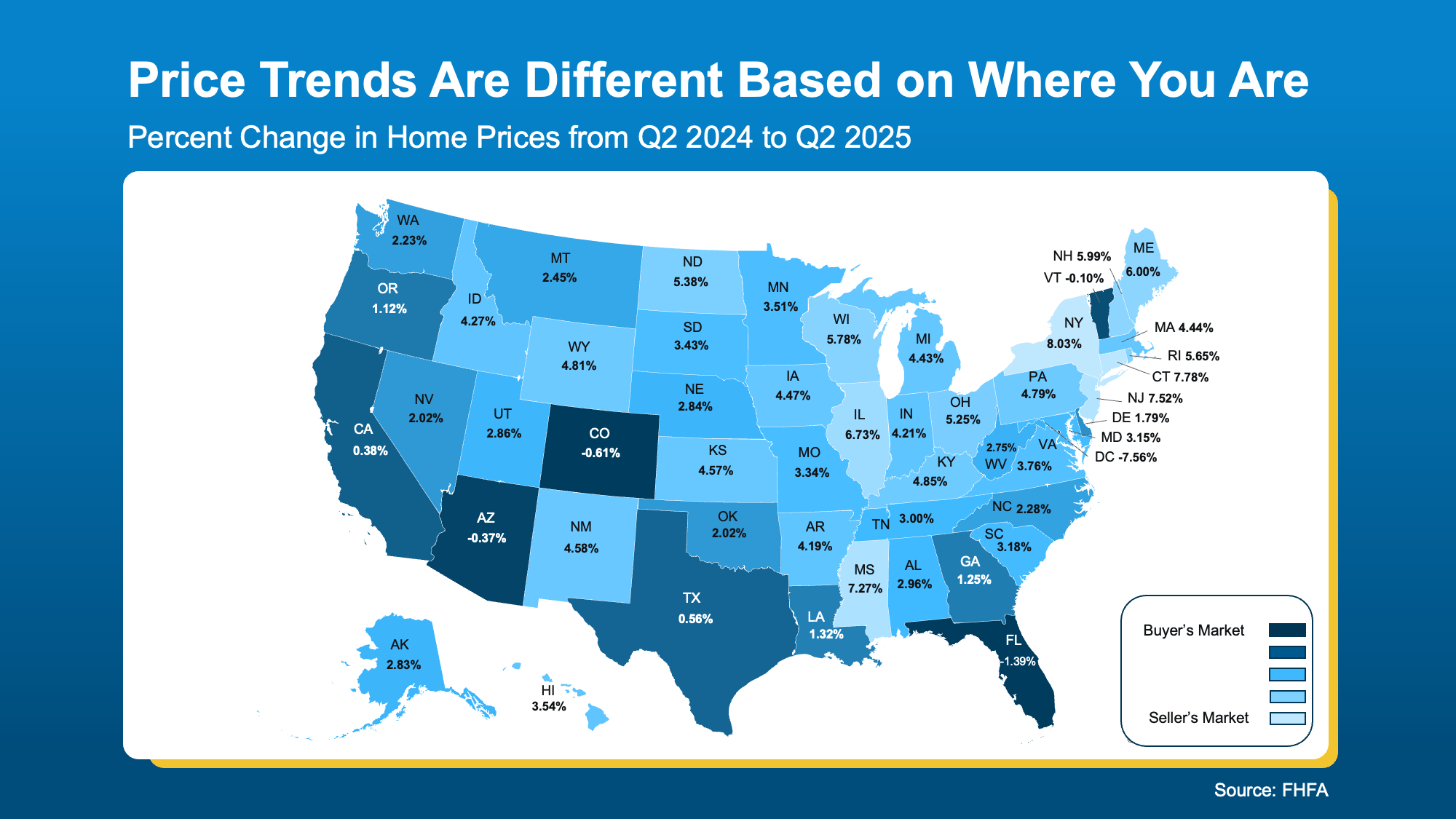
There’s a new divide in housing right now. In some states, buyers are gaining ground. In others, sellers still have the upper hand. It all depends on where you live. Curious what’s happening in your state?

These 3 maps show how the split is playing out across the country. In each one:

  • Darker Shades of Blue = Buyer friendly
  • Lighter Shades of Blue = Seller strong

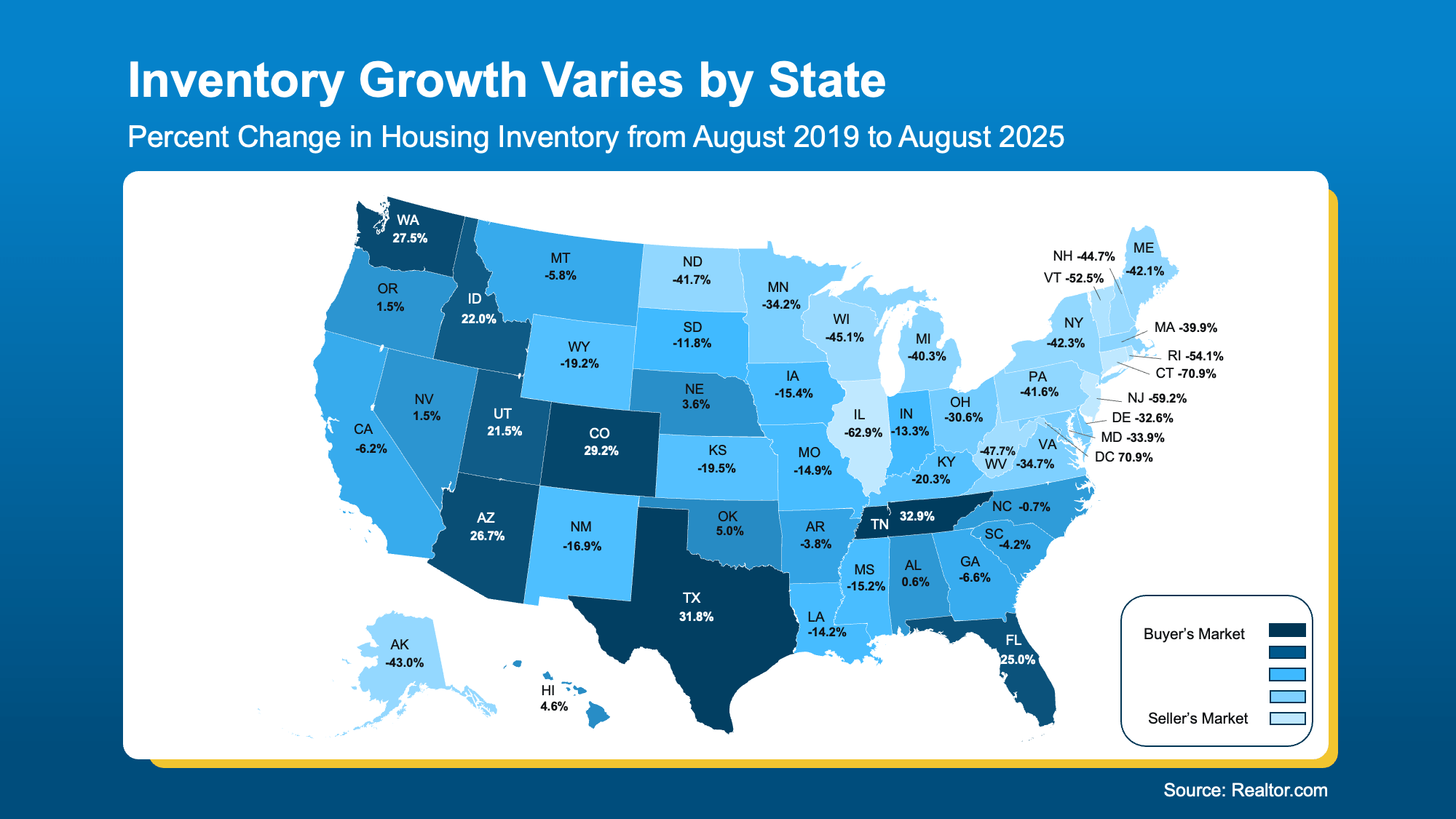
Inventory Sets the Stage

While the number of homes for sale has improved pretty much across the board, how much growth we’ve seen can look dramatically different based on where you live. And that impacts who has the leverage today.

This map uses data from Realtor.com to break it down:

  • The darker shades of blue show where inventory has risen more than in other areas of the country. Buyers here have more to choose from and should have an easier time finding a home and leveraging their negotiating power.
  • The lighter shades of blue are where inventory is still low. Sellers are more likely to sell quickly and make fewer concessions.

Prices Follow Inventory

The second map tracks how home prices are shifting by state. Just like above, you can see the divide taking shape. Many of the same areas are darker blue. That’s because there’s such a close tie between inventory and prices. When inventory rises, prices moderate.

  • The darker shades of blue are where prices are actually coming down slightly or flattening. Because, with more homes for sale, sellers may have to cut their price or throw in concessions to get a deal done. And that benefits budget-conscious buyers.
  • The lighter shades of blue show areas where prices are still climbing because inventory is low. Sellers may still see buyers competing for homes, and that pushes prices higher.

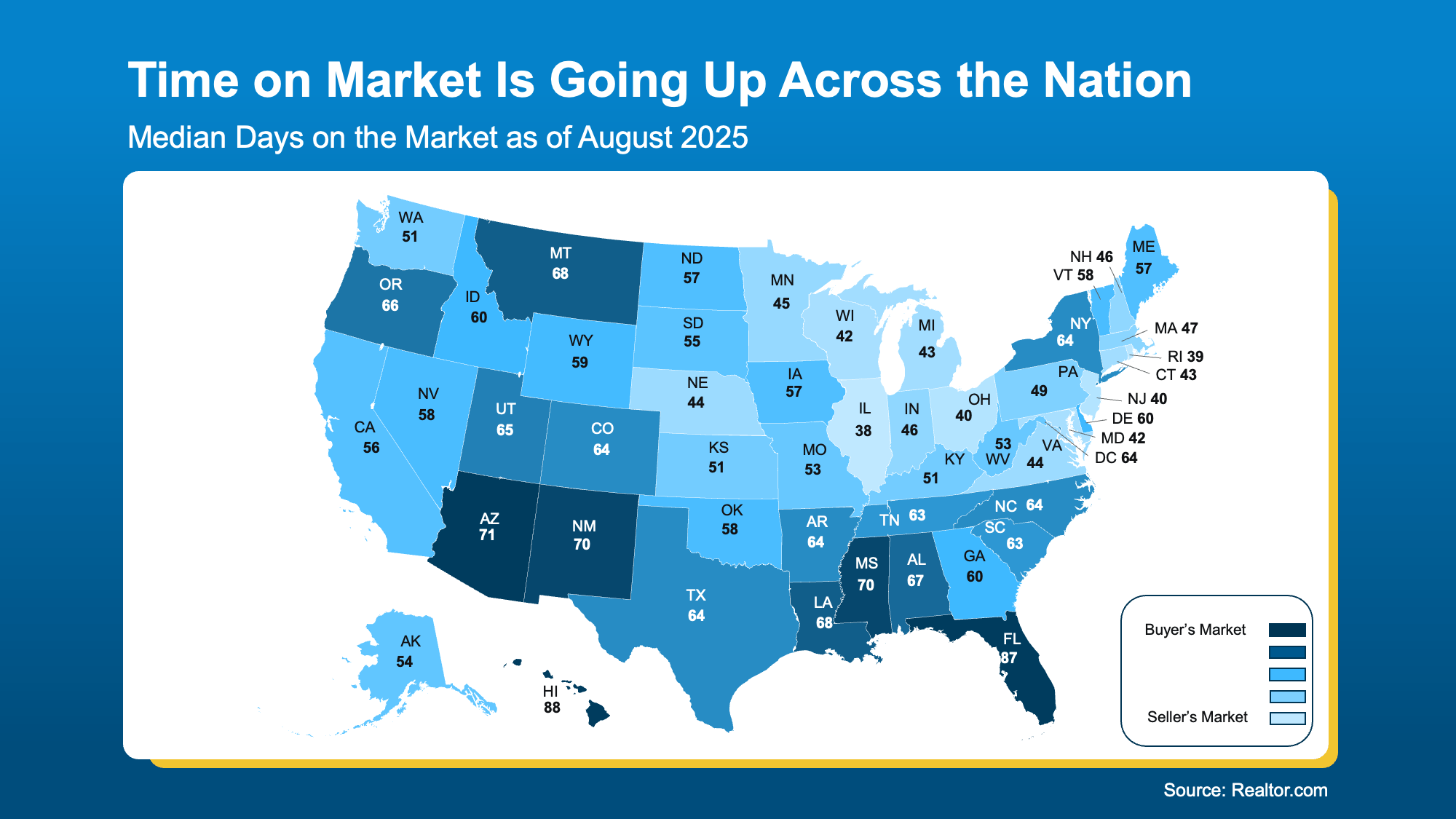
Time on Market Tells the Same Story

Finally, here’s how quickly homes are selling state by state. See the colors? For the most part, they follow the same general pattern with a lot of the darker blues being in the lower half of the country. And here’s why.

Generally speaking, as inventory grows, homes don’t sell as quickly. That’s why some of the same areas that have more inventory, see homes take more time to sell.

  • The darker blues show where homes are staying on the market longer. That gives buyers more time and options, and signals sellers may need to adjust their expectations.
  • The lighter blues are where homes are still moving quickly. Sellers there may feel more confident, and buyers may need to act fast.

a map of the united statesThis explains why some sellers in these darker blue states are feeling frustrated when their listings linger, while others in tighter markets (like the lighter blue states) are still seeing their homes sell quickly.

Why an Agent’s Local Expertise Is the Key To Unlocking Today’s Market

Basically, the housing market is experiencing a divide. And conditions are going to vary a lot based on where you live, where you’re moving, and if you’re buying or selling. While the state-level information helps, what really matters is what’s happening in your town and your neighborhood. And only a local agent truly has the information you need.

Bottom Line

Want to know what conditions look like in your neighborhood?

If you want to understand which side of the market you’re on, let’s connect. We can walk through the numbers and what they mean for your next move.

Uncategorized • August 28, 2025

In a Shifting Bay Area, Los Gatos Luxury Remains a Standout

How are home prices shifting for luxury properties in Los Gatos compared to broader Bay Area trends?

Luxury home prices in Los Gatos have held strong and, in some cases, outpaced nearby markets—especially in the $3M+ tier—due to tight inventory and high buyer demand for top-tier schools, walkability, and community prestige.

If you’re shopping for a luxury home in Silicon Valley, Los Gatos continues to be a beacon of exclusivity and long-term value. But with Bay Area market trends in flux, it’s smart to ask: how does Los Gatos stack up now versus comparable luxury hubs like Palo Alto, San Jose, and the coastal Peninsula?

Los Gatos: Still a Standout in the $3M+ Market

According to Live in Los Gatos, homes priced above $3 million in Los Gatos have seen continued buyer competition, with many closing near or at asking price. While the overall Bay Area market has become slightly more balanced, Los Gatos remains an outlier in:

  • Days on market: High-end homes in central Los Gatos (95030, 95032) average fewer days than surrounding cities.
  • Inventory pressure: Fewer new listings and slower seller movement create a supply crunch.
  • Buyer intent: Many luxury buyers are relocating from denser cities, drawn to Los Gatos for space and top-ranked schools.

Comparison with Other Bay Area Luxury Markets

Palo Alto

  • Median prices remain higher than Los Gatos.
  • Inventory is tighter, but competition has cooled slightly post-peak.
  • Tech-adjacent but lacks the same small-town charm.

San Jose (Luxury Segments like Almaden Valley & Silver Creek)

  • Offers value per square foot but doesn’t command the same prestige.
  • Luxury homes here are more spacious but may sit longer on market.

Coastal Peninsula (e.g., Hillsborough, Atherton)

  • Remains ultra-high-end, but many buyers are priced out.
  • More investors; fewer primary-residence buyers compared to Los Gatos.

Why Los Gatos Is Holding Value

Several unique features make Los Gatos especially resilient in a shifting market:

  • Top-ranked public schools (Los Gatos High, Fisher Middle).
  • Charming downtown with upscale dining, boutique shopping.
  • Proximity to tech corridors while offering a quieter, residential lifestyle.
  • Low turnover in luxury neighborhoods, signaling long-term owner satisfaction.

What This Means for Buyers

If you’re considering a luxury purchase in Los Gatos:

  • Expect competition at the $3M+ level, particularly for updated, walkable homes.
  • Be prepared to act quickly, especially for properties in Almond Grove, Glenridge, or near downtown.
  • Use a local luxury agent who understands pricing nuances block by block.

Final Takeaway

Compared to the broader Bay Area, Los Gatos offers a rare blend of investment-grade value and quality of life. It’s still a seller-friendly luxury market, but buyers who act strategically can secure exceptional properties with long-term upside.

Looking for a trusted expert to guide you through the Los Gatos luxury market? Contact your Michael Rulfs your local Realtor (408.504.0385) today to start your tailored search—and get ahead of the next pricing wave.