
 Facebook
 X
 Pinterest
 Copy Link
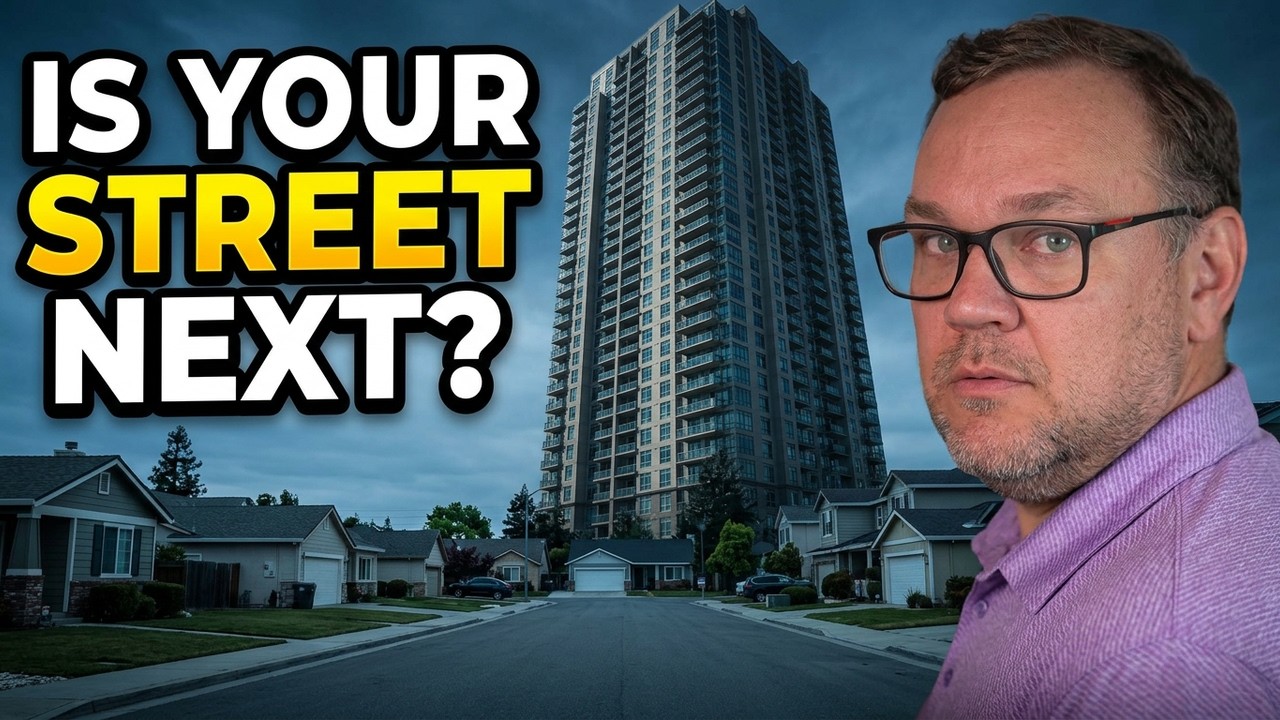
The short answer: For SB 79 San Jose homeowners, the answer is probably not, at least not soon. The law lets 5 to 9 story housing go up within a half mile of BART, Caltrain, and VTA light rail, but it doesn’t force anyone to sell. The first projects in San Jose will land on strip malls, old office sites, and parking lots near transit, and it’s a 5 to 10 year story.
For a few weeks straight, I got some version of the same text every day. Is SB 79 going to drop a nine-story apartment building on my street? After I covered the changes repricing South San Jose, almost every comment and DM came back to SB 79 San Jose questions. So I read the whole law, the legal breakdowns, and what other cities were doing with it.
I’m third-generation South Bay. I grew up in Almaden, went to Leland High School, and my family was here before anyone called it Silicon Valley. I know which streets sit next to light rail and which ones don’t. And two streets a few blocks apart are not going to be treated the same under this law. Once you see why, most of the worry goes away.
I walked through this on camera:
I also went live after the law took effect and pulled up the regional map on screen. You can watch that one here: SB 79 livestream from July 2026.
What does SB 79 actually do in San Jose?
Governor Newsom signed SB 79 on October 10, 2025. It took effect on July 1, 2026. The idea is simple. If a parcel sits within a half mile of a major transit stop and it’s zoned for homes, shops, or a mix of the two, apartments and condos are now an allowed use there. Even in spots where local zoning used to say no.
Inside that half mile, the state’s minimums beat the city’s zoning. A city can’t hold a qualifying project to a lower height or density just because its own code says something different. How big a building can go comes down to two things: what kind of transit is nearby, and how close the parcel is to it.
In the Bay Area, it covers parcels near BART, Caltrain, VTA light rail, and true bus rapid transit stops in four counties, including Santa Clara County, according to MTC, the regional planning agency. Regular frequent bus lines don’t count.
How tall can buildings get near transit?
| Distance from the stop | Tier 1: BART and qualifying Caltrain stations | Tier 2: VTA light rail and bus rapid transit |
|---|---|---|
| Within 200 feet | 95 ft, 160 homes per acre | 85 ft, 140 homes per acre |
| Within 1/4 mile | 75 ft, 120 homes per acre | 65 ft, 100 homes per acre |
| 1/4 to 1/2 mile | 65 ft, 100 homes per acre | 55 ft, 80 homes per acre |
In plain terms, that’s roughly nine stories right next to a busy train station and five to eight stories near light rail, stepping down as you move away from the platform. Projects with 11 or more units also have to set aside some homes at below-market prices. The law requires at least 7% for extremely low income households, 10% for very low income, or 13% for lower income, or the city’s own rule if it asks for more.
What can San Jose change?
Cities get some say. They can exempt certain areas, delay certain sites until the next housing element, or write their own transit plan that moves the new housing around. More on this block, less on that one. What they can’t do is cut the total. They can change the where, not the how much. Every one of those changes needs state review by HCD.
Update, November 2026: San Jose has already used one of those options. In March 2026, the City Council approved an ordinance (No. 31316) that exempts nonresidential sites in designated industrial employment hubs from SB 79. That covers the North First Street core, the Berryessa and International Business Park area near the Milpitas BART station, and Old Edenvale. The details are on the City of San Jose SB 79 page.
Why most SB 79 San Jose homeowners shouldn’t panic
1. Your house isn’t getting bulldozed
SB 79 makes building legal. It doesn’t force anybody to sell. A developer has to buy the land first, and single-family homes are expensive, owned one at a time, and a pain to bundle into one big site. If you own your home, nobody is taking it.
2. Renters have protections
A project can’t go on a site with more than two rent-controlled units that tenants lived in during the last seven years. Other rentals aren’t locked down the same way, but projects still have to follow the state’s replacement housing and relocation rules. A lot of the time, that math just doesn’t pencil out for a developer.
3. The easy targets are commercial lots
This is the one most people miss. Strip malls, old office buildings, big parking lots, car lots, and tired shopping centers near light rail and Caltrain are much easier to redevelop. Usually one owner instead of fifty. Nobody living there who has to move out. And the lots are big enough to fit something. That’s where the first wave goes, not your street of houses.
4. Even approved projects take years
Buy the land, draw the plans, pull the permits, line up the money. Construction alone runs 18 to 24 months. Most of what got approved in 2026 won’t open until 2028, 2029, or more likely 2030. This isn’t changing your neighborhood overnight.
Where will SB 79 show up first in San Jose?
Think commercial land sitting next to transit. Here’s where that lines up, based on what I was seeing in June and July 2026. Nobody had locked in exact lots yet, so treat this as where it’s easiest, not a list of what’s coming.
| Area | Transit | Worth Knowing |
|---|---|---|
| Downtown and Diridon | Caltrain, light rail, future BART | Already changing. SB 79 adds fuel. |
| Blue Line south of downtown | VTA light rail along 87 and 85 | Older commercial sites near Tamien, Curtner, Capitol, Branham, and Ohlone/Chynoweth. |
| Ohlone/Chynoweth by Oakridge | VTA light rail | The kind of big commercial site near transit that moves first. |
| Monterey Road | Caltrain | Lots of older commercial lots along the tracks. |
| North First and Tasman | VTA light rail | Much of the industrial land is now exempt (see the update above). |
Downtown around Diridon was already the hub. Caltrain, light rail, and the planned BART extension all come together there. I covered the bigger downtown picture in what happens to Google’s downtown San Jose land.
The Blue Line runs right down the middle of 87 and then 85, past Willow Glen and on through South San Jose toward Blossom Valley and Santa Teresa. There’s older commercial property around a lot of those stops. In my livestream I mentioned plans near the Capitol station by Narvaez Avenue for a mixed-use building with shops on the ground floor and homes above.
I’d also watch Eastridge and Evergreen as transit improves on that side of town. Better transit access tends to help the single-family homes nearby, because now you have a way to get around the valley without sitting in traffic.
How to check your own address
Three things will tell you how SB 79 touches your home:
- The map. MTC publishes the SB 79 map for the Bay Area. Punch in your address and see whether you’re inside a half-mile zone and which tier applies. When I made the video in June 2026 it was still a draft, so check the current version.
- What San Jose decides. The city has already exempted its industrial employment hubs. Watch for more ordinances, especially on minimum densities downtown.
- Permits. The first projects that actually get filed will show you which areas are really moving. I’ll be watching those too.
If you want the plain-English legal summary, ABAG has an SB 79 resource page for local governments that’s easy to follow.
Will SB 79 hurt single-family home values?
I don’t believe it does for most homes. San Jose isn’t making more land, and the state isn’t trying to build more single-family houses. It’s trying to build up near transit. That makes the single-family home rarer over time, and rare tends to hold value. A viewer in my livestream told me they owned a home in Toronto when a similar change came through, and the single-family homes there went up in value.
Now, if a seven-story building goes up directly behind a specific house, that probably weighs on that one home’s value. Being right next to a shopping center near transit is a different bet than being six blocks back on a quiet street. Location inside the zone matters.
I wrote more about what’s moving prices across the valley in the five forces repricing Silicon Valley home values.
What I’d do
Figure out which bucket you’re in.
| Your situation | What it means | What I’d do |
|---|---|---|
| More than a half mile from any rail or light rail stop | The law doesn’t touch your parcel. | Nothing. You may notice more traffic and density in areas you drive through. |
| Inside the half mile, on a regular street of houses | Technically in the zone, but at the back of the line. | Watch the map and nearby permits. No need to act. |
| Near a commercial strip by transit | The area will change over time. More housing, more shops, more you can walk to. | Expect change over 5 to 10 years. That has usually been good for nearby home values, not bad. |
| Buying or selling in the next year | Inside vs. outside the half mile is a different bet. | Talk it through before you write an offer or set a price. |
If you’re shopping, the same house inside the zone versus outside it can be a different long-term story. That’s worth weighing alongside price and commute. My guide to the best neighborhoods to buy in San Jose at $1M, $2M, and $3M is a good place to start.
SB 79 is real and it’s not going away. But the worry is way ahead of the facts. The first wave is commercial, it’s slow, and it’s a 5 to 10 year story, not a six-month one.
SB 79 questions I get
Does SB 79 apply to my house in San Jose?
Only if your parcel is zoned residential, mixed-use, or commercial and sits within a half mile of a qualifying stop. In San Jose that means BART, Caltrain, or VTA light rail. Regular bus lines don’t count. Look up your address on MTC’s SB 79 map to know for sure.
Can a developer force me to sell my home under SB 79?
No. SB 79 makes certain housing legal to build. It doesn’t force anyone to sell, and it doesn’t take property. A developer still has to buy the land from a willing owner.
How tall can buildings get under SB 79?
It depends on the stop and the distance. Next to a BART or Caltrain station (within 200 feet), the state standard is 95 feet. Near a VTA light rail stop it’s 85 feet right next to the stop, 65 feet within a quarter mile, and 55 feet out to a half mile. That works out to roughly five to nine stories.
When did SB 79 take effect?
Governor Newsom signed it on October 10, 2025, and it took effect on July 1, 2026. Cities can carve out some areas or adopt their own plan, but those changes need state review by HCD.
Did San Jose exempt any areas from SB 79?
Yes. In March 2026 the City Council approved an ordinance that exempts nonresidential sites in designated industrial employment hubs, like the North First Street core, the Berryessa and International Business Park area, and Old Edenvale. Homes and commercial strips near transit outside those hubs are still covered as of November 2026.
Will SB 79 lower my home value?
I don’t expect it to for most single-family homes. San Jose isn’t making more land, and most new SB 79 housing will be apartments and condos near transit. A large building right behind a specific house could weigh on that one home’s value, so location within the zone matters.
How long until SB 79 projects actually get built?
Years. A developer has to buy the land, design it, get permits, and line up financing, and construction alone often runs 18 to 24 months. Most projects approved in 2026 won’t open until 2028 to 2030.
Wondering what SB 79 means for your block?
Text me at 408-504-0385 with your neighborhood and I’ll tell you straight where you land. Thinking about a move? I’ll put together a free market analysis on your home. No pressure.
Keep reading
- South San Jose Home Values: 6 Changes Most Owners Haven’t Noticed: the video that started all the SB 79 questions.
- Cambrian vs Blossom Valley vs Santa Teresa: three South San Jose areas along the Blue Line, compared.
- Google Downtown San Jose: What Happens to the Land Now?: the Diridon area, BART, and what’s stalled.
- Best Neighborhoods to Buy in San Jose at $1M, $2M, and $3M: where each budget goes.
SB 79 standards come from the law as summarized by MTC (July 2026) and the City of San Jose. Local rules, maps, and exemptions can change, and a specific parcel can differ from the general rules. Verify your parcel on the official map before relying on it. This is general information, not legal or tax advice.
Michael Rulfs, REALTOR® | Coldwell Banker Realty | DRE #01832571. Third-generation South Bay. Born here, raised here, still here. 408-504-0385 · michael.rulfs@CBRealty.com
